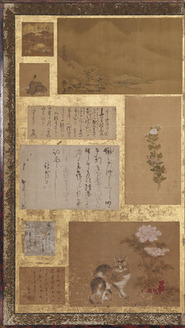
This item is from the Kinai Yasuguchi family tradition. It was donated to the Kyoto Museum of Fine Arts in the Showa fifteen year (around 1930). A cat figure is depicted on the lower left, with blood spatter visible nearby.
近江屋井口家伝来品。昭和十五年に恩賜京都博物館に寄贈された。左下の猫図付近に血液の飛沫が見られる。
View the original at Japan Search →Article 1 states the purpose plainly: prevent trade in stolen goods, find them quickly, and speed the recovery of victims. Article 2 then defines a used article to include, in the same breath, art objects held for appreciation. Dealing in them requires a licence.
The cool part. Article 16 requires a dealer to record every transaction: the date, the item and quantity, its distinguishing features, and the address, name, occupation and age of the other party. Article 15 requires that a dealer who suspects an item is stolen report it to a police officer immediately. So the antique trade runs on a register the police may read, and a painting becomes a second-hand article the moment it has been used once.
Verify at e-Gov 法令検索 →Use it Take the ratio, not the picture. It sets a page better than a grid does.
Description source: museum curator text, translated — not generated