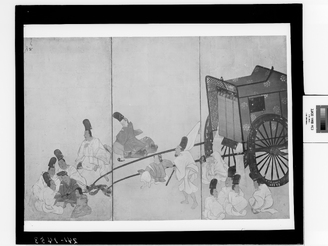
The Tokyo National Museum holds a "Hobaya Soetsu calligraphy scroll, Ushiwaka Kunisada's screen painting" (Storage number: A-12190). The information about the work's name, etc. is written based on the investigation records during the shooting in 1933 by the Tokyo Cultural Property Research Institute. For the current information about the work's name, etc., please check with the relevant preservation institutions.
東京国立博物館が所蔵する「俵屋宗達筆、烏丸光広賛/関屋図屏風」(機関管理番号:A-12190)を東京文化財研究所で1933年に撮影したガラス乾板です。作品名等の情報は撮影時の調査記録を元に記載しております。現在の作品名等については各所蔵機関の情報をご確認ください。
View the original at Japan Search →Article 1 describes the Ainu as the indigenous people of the northern part of the Japanese archipelago and of Hokkaido in particular, and cites international circumstances concerning indigenous peoples as a reason for acting. It requires the government to set a basic policy, and lets municipalities draw up regional plans for approval by the Prime Minister.
The cool part. The definition in Article 2 is the part to sit with. Ainu culture means the Ainu language, and the ways of living, music, dance, crafts and other cultural products inherited among the Ainu, and cultural products developed from these. That final clause refuses to freeze the culture at a date, and treats what is made next as equally the thing being protected. The Act then reaches into trademark law, reducing or waiving registration fees for regional collective trademarks used by approved projects.
Verify at e-Gov 法令検索 →Use it Palette for a single-colour run: one ink, heavy stock, nothing else on the sheet.
Description source: museum curator text, translated — not generated