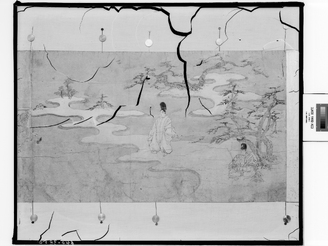
The Tokyo National Museum holds a "Zushi Monogatari Emaki" (A-17), which was photographed in glass plates by Tokyo Cultural Property Research Institute in 1940. The information about the title and so on is based on the investigation records at the time of photographing. For the current information about the title and so on, please check with the respective preservation institutions.
東京国立博物館が所蔵する「住吉物語絵巻」(機関管理番号:A-17)を東京文化財研究所で1940年に撮影したガラス乾板です。作品名等の情報は撮影時の調査記録を元に記載しております。現在の作品名等については各所蔵機関の情報をご確認ください。
View the original at Japan Search →A statute built to coax privately held work onto public walls. An owner registers a piece with the Commissioner for Cultural Affairs, then contracts with a museum to display it. Article 2 defines a work of art broadly, as paintings, sculpture, crafts and other tangible cultural products that are movable, which is the legal way of saying anything you could carry out of the house.
The cool part. The terms are the interesting part. Article 2 requires the public display contract to run for five years or more, and to contain a clause stating that the parties may not give notice of cancellation. You cannot lend a masterpiece for the tax treatment and then reclaim it when the market turns. Japan concluded the barrier to seeing art was never storage. It was ownership, and the fix was a contract you cannot walk out of.
Verify at e-Gov 法令検索 →Use it A motif small enough to blind-deboss, which is where restraint actually shows.
Description source: museum curator text, translated — not generated