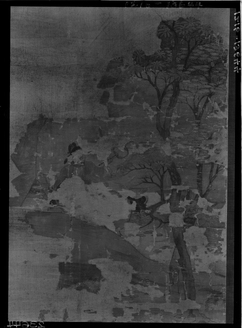
Kyoto National Museum possesses a "mountain water scroll screen" (Depository code: A-Alpha 227). The glass plate photograph of this work was taken at Tokyo Cultural Property Research Institute around 1930-1955. The information about the title and so on is written based on the investigation records during the photographing process. For the current information about the title and so on, please confirm it with the respective preservation institutions.
京都国立博物館が所蔵する「山水屏風」(機関管理番号:A甲227)を東京文化財研究所で1930~1955年頃に撮影したガラス乾板です。作品名等の情報は撮影時の調査記録を元に記載しております。現在の作品名等については各所蔵機関の情報をご確認ください。
View the original at Japan Search →Article 2 defines a museum as an institution that collects, keeps and displays materials on history, art, folklore, industry and natural science for public use, carries out research on them, and which has been registered under Chapter 2 of this Act. The registration is not decorative. In law, an unregistered collection open to the public is not a museum.
The cool part. The definition of keeping is given as including raising. That single parenthesis is why a zoo, an aquarium and a botanical garden sit inside museum law in Japan: the collection is allowed to be alive. Article 1 also grounds the statute in the Social Education Act and the Basic Act on Culture and the Arts, which places museums in education first and culture second.
Verify at e-Gov 法令検索 →Use it The border is the idea. Use it as an edge treatment and leave the centre empty.
Description source: museum curator text, translated — not generated