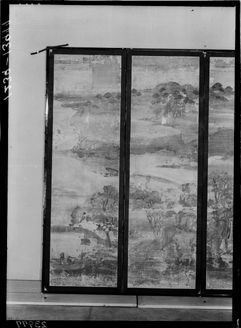
Kyoto National Museum holds a "mountain water scroll screen" (institution management number: A-Alpha 227). This is a glass plate photograph taken at Tokyo Cultural Property Research Institute around 1930-1955. The information about the title and so on is written based on the investigation records at the time of photographing. For the current information about the title and so on, please check with each preservation institution.
京都国立博物館が所蔵する「山水屏風」(機関管理番号:A甲227)を東京文化財研究所で1930~1955年頃に撮影したガラス乾板です。作品名等の情報は撮影時の調査記録を元に記載しております。現在の作品名等については各所蔵機関の情報をご確認ください。
View the original at Japan Search →Article 1 states the purpose plainly: prevent trade in stolen goods, find them quickly, and speed the recovery of victims. Article 2 then defines a used article to include, in the same breath, art objects held for appreciation. Dealing in them requires a licence.
The cool part. Article 16 requires a dealer to record every transaction: the date, the item and quantity, its distinguishing features, and the address, name, occupation and age of the other party. Article 15 requires that a dealer who suspects an item is stolen report it to a police officer immediately. So the antique trade runs on a register the police may read, and a painting becomes a second-hand article the moment it has been used once.
Verify at e-Gov 法令検索 →Use it Palette for a single-colour run: one ink, heavy stock, nothing else on the sheet.
Description source: museum curator text, translated — not generated