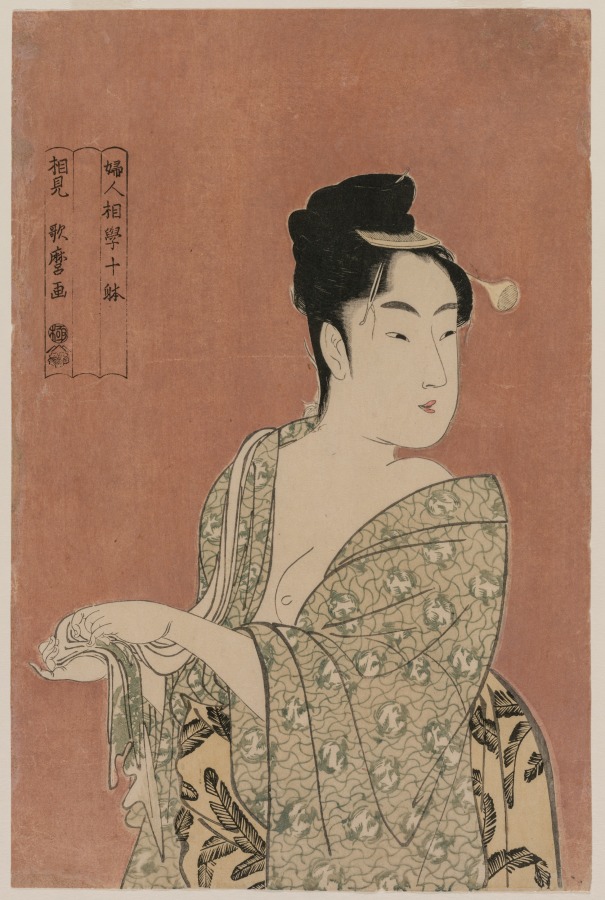
Kitagawa Utamaro was well known for his close-up portraits that belonged to a genre, or category, of images called <em>bijinga</em> (pictures of beautiful people). This print is from a series that invites comparisons of the attractiveness of different figures. It comes from a series that assigns per
View the original at Cleveland Museum of Art →Drafted 30 May 1950, in force that 29 August. It exists because of a fire: the Hōryū-ji main hall burned on 26 January 1949, taking seventh-century wall paintings with it. What followed protects techniques, not only objects.
The cool part. "Living National Treasure" appears nowhere in the statute. The real designation is Preserver of an Important Intangible Cultural Property, certified by a cabinet minister. Japan does not register the pot. It registers the potter.
Verify at e-Gov 法令検索 →Use it Take the ratio, not the picture. It sets a page better than a grid does.
Description source: museum curator text — not generated