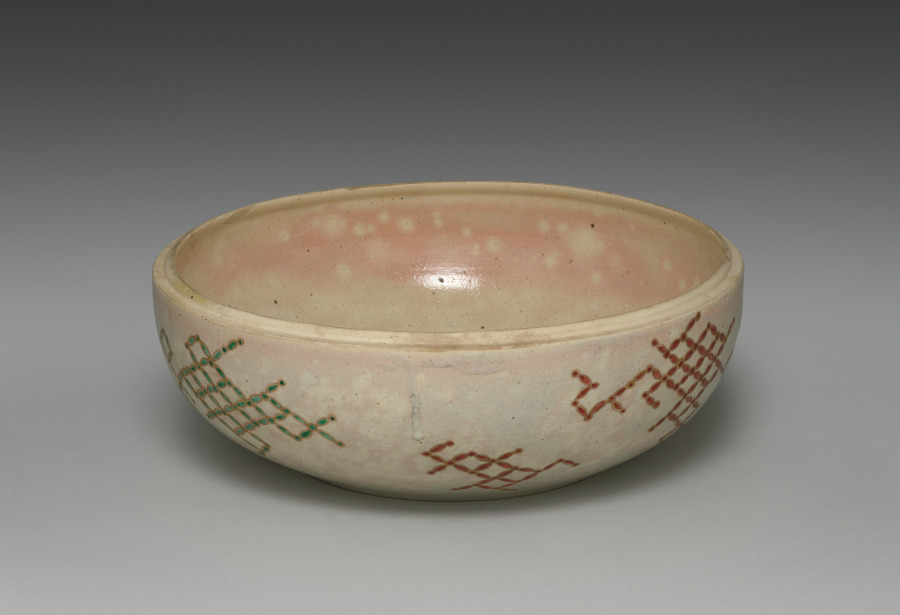
While porcelain was their primary specialization, all the members of the Seifū studio also made stoneware painted with iron oxide designs under the glaze and with color enamel and gold over the glaze. Many examples are further characterized by pink dots brought out during firing and by crackling in the glaze. Works of this type are classified as Kyoto ware, after the city where the style developed. People used the ceramics for a diversity of purposes, from everyday dining to chanoyu, or Japanese tea practice.
View the original at Cleveland Museum of Art →Article 3 tells libraries what to gather, and the list is wider than books: local materials, local administrative records, works of art, records and film. Article 3 also requires interlibrary lending, travelling collections and mobile libraries, so that the holdings move toward the reader rather than waiting.
The cool part. Article 17 is one sentence and admits nothing. A public library may not collect an admission fee, or any consideration whatsoever, for the use of library materials. Free is not a policy that a budget round can revisit, it is the statute. Article 26 is stranger still: the state and local authorities must not interfere in the work of a private library, and must not give it a subsidy. Independence is protected by withholding the money.
Verify at e-Gov 法令検索 →Use it Two-colour foil on uncoated stock gets you most of this at production cost.
Description source: museum curator text — not generated