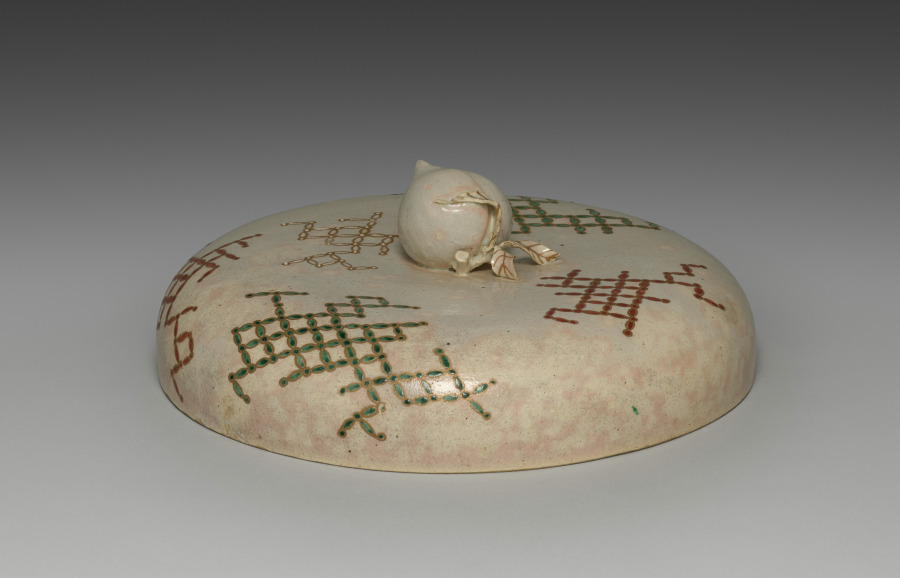
While porcelain was their primary specialization, all the members of the Seifū studio also made stoneware painted with iron oxide designs under the glaze and with color enamel and gold over the glaze. Many examples are further characterized by pink dots brought out during firing and by crackling in the glaze. Works of this type are classified as Kyoto ware, after the city where the style developed. People used the ceramics for a diversity of purposes, from everyday dining to chanoyu, or Japanese tea practice.
View the original at Cleveland Museum of Art →A statute built to coax privately held work onto public walls. An owner registers a piece with the Commissioner for Cultural Affairs, then contracts with a museum to display it. Article 2 defines a work of art broadly, as paintings, sculpture, crafts and other tangible cultural products that are movable, which is the legal way of saying anything you could carry out of the house.
The cool part. The terms are the interesting part. Article 2 requires the public display contract to run for five years or more, and to contain a clause stating that the parties may not give notice of cancellation. You cannot lend a masterpiece for the tax treatment and then reclaim it when the market turns. Japan concluded the barrier to seeing art was never storage. It was ownership, and the fix was a contract you cannot walk out of.
Verify at e-Gov 法令検索 →Use it Palette for a single-colour run: one ink, heavy stock, nothing else on the sheet.
Description source: museum curator text — not generated