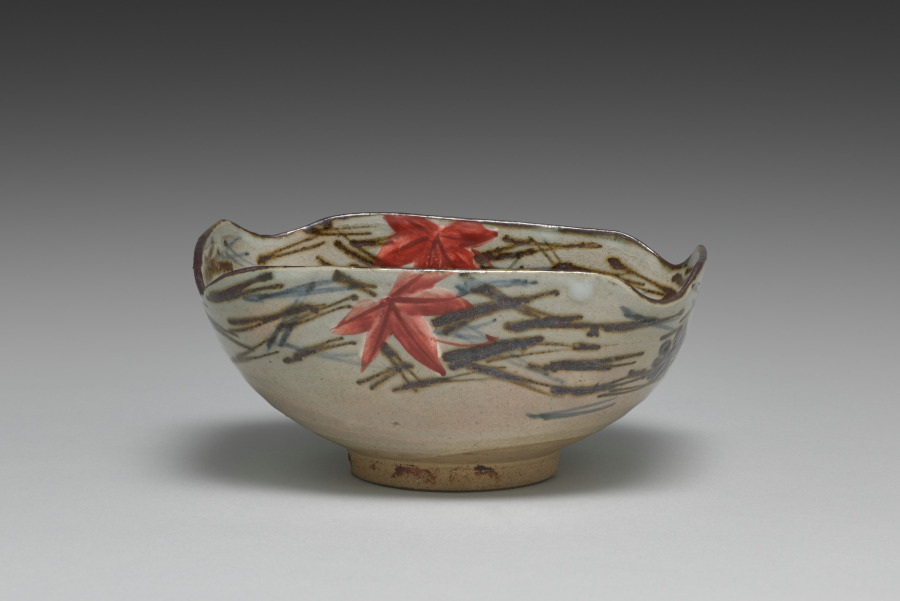
Seifū Yohei I made both blue and white porcelains after Ming dynasty (1368–1644) Chinese wares fired in the kilns at Jingdezhen for export. He also made colorful stoneware in the style of his teacher, Nin’ami Dōhachi (Takahashi Dōhachi II) (1783–1855).
View the original at Cleveland Museum of Art →A national statute written for one city. Article 1 recites the beauty of Kyoto and its historically, culturally and artistically important position in the world, and gives two purposes: to raise international culture and serve the ideal of permanent world peace, and to contribute to the economic recovery of Japan. It was passed five years after the war ended.
The cool part. Article 3 lets Kyoto designate culture tourism preservation districts and, by ordinance, prohibit building, rebuilding, removal, changes to the shape of the land and the cutting of bamboo, trees and stone, with compensation for ordinary loss. Then Article 4 does something statutes almost never do. It places a duty on the mayor personally: in the spirit of local autonomy, and with the cooperation of residents, the mayor must engage in ceaseless activity to complete the city. Nara received its own Act, number 250, the day before.
Verify at e-Gov 法令検索 →Use it A motif small enough to blind-deboss, which is where restraint actually shows.
Description source: museum curator text — not generated