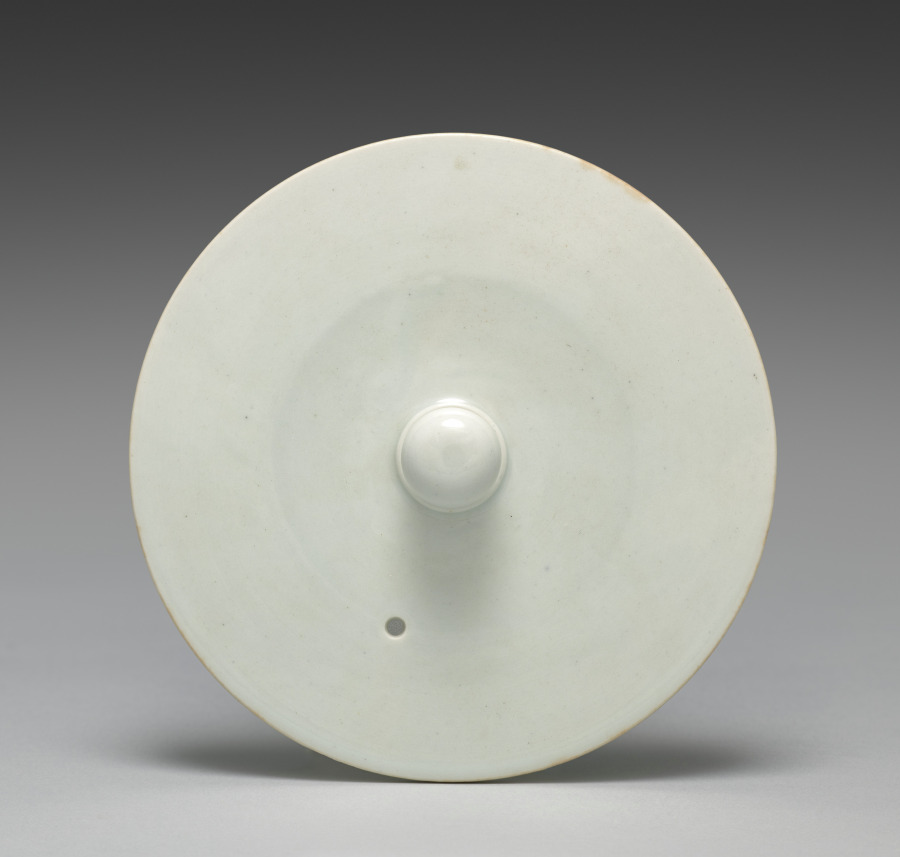
This sake pourer has a wide basin with a low foot; a generous spout open across the top half; a flat, round lid with a small knob recessed flush to the top of the container; and a tall, arched handle that meets the container where the top joins the basin at a sharp angle. This vessel is glazed but otherwise undecorated. Unlike the creamy white color of some Yohei III works, the white of this sake pourer has the bluish cast typical of porcelains produced in Kyoto.
View the original at Cleveland Museum of Art →Japan implementing the 1970 UNESCO Convention. When a foreign state reports that cultural property has been stolen from an institution, the Ministry of Foreign Affairs notifies the education ministry, which designates the object as specified foreign cultural property, after consulting the trade ministry. Importing a designated object then requires approval under the foreign exchange and trade law.
The cool part. Article 6 quietly rewrites private law. Under the Civil Code a good-faith purchaser is normally secure against a recovery claim after two years. For designated stolen foreign cultural property, the victim may demand recovery from two years after the theft until ten years have passed. Buying in good faith does not settle the question for a decade, which is roughly how long it takes a stolen object to surface on a legitimate market.
Verify at e-Gov 法令検索 →Use it Palette for a single-colour run: one ink, heavy stock, nothing else on the sheet.
Description source: museum curator text — not generated