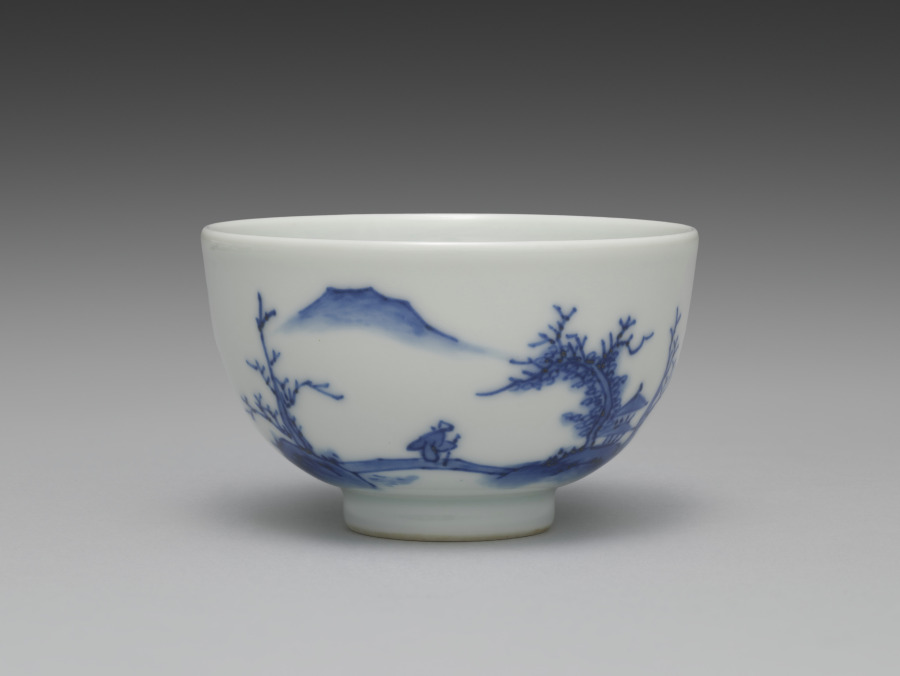
This tea set has a side-handled pot called a kyūsu, used for steeping, straining, and serving tea. Unlike some others, this set also has a yuzamashi, a container used to cool boiled water to just the right temperature for the best flavor when steeping. Seifū Yohei III’s painting teacher, Tanomura Chokunyū (1814–1907), made a visual record of famous sencha events that shows how these kinds of porcelains fit with objects such as a stove and kettle to form a complete set of utensils for tea preparation, and with ensembles of decorative objects meant to inspire creativity. The theme of this sencha tea set is the Chinese scholar-recluse in an idyllic landscape. Each of the five teacups has a landscape with an architectural structure and some human activity.
View the original at Cleveland Museum of Art →A statute built to coax privately held work onto public walls. An owner registers a piece with the Commissioner for Cultural Affairs, then contracts with a museum to display it. Article 2 defines a work of art broadly, as paintings, sculpture, crafts and other tangible cultural products that are movable, which is the legal way of saying anything you could carry out of the house.
The cool part. The terms are the interesting part. Article 2 requires the public display contract to run for five years or more, and to contain a clause stating that the parties may not give notice of cancellation. You cannot lend a masterpiece for the tax treatment and then reclaim it when the market turns. Japan concluded the barrier to seeing art was never storage. It was ownership, and the fix was a contract you cannot walk out of.
Verify at e-Gov 法令検索 →Use it The border is the idea. Use it as an edge treatment and leave the centre empty.
Description source: museum curator text — not generated