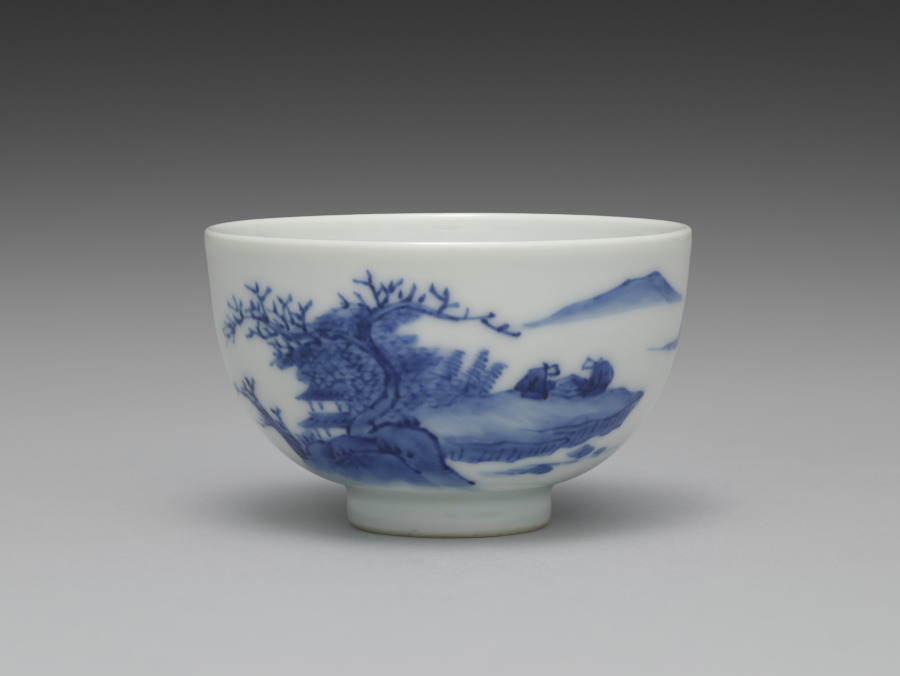
The theme of this sencha tea set is the Chinese scholar-recluse in an idyllic landscape. Each of the five teacups has a landscape with an architectural structure and some human activity. This tea set has a side-handled pot called a kyūsu, used for steeping, straining, and serving tea. Unlike some others, this set also has a yuzamashi, a container used to cool boiled water to just the right temperature for the best flavor when steeping. Seifū Yohei III’s painting teacher, Tanomura Chokunyū (1814–1907), made a visual record of famous sencha events that shows how these kinds of porcelains fit with objects such as a stove and kettle to form a complete set of utensils for tea preparation, and with ensembles of decorative objects meant to inspire creativity
View the original at Cleveland Museum of Art →Article 1 states the aim as a beautiful and dignified national land, and it covers not only cities but farming, mountain and fishing villages. Inside a landscape planning area, Article 16 requires advance notification of new building, extension, rebuilding, relocation, and any repair or alteration that changes the exterior. Landscape Districts go further and impose direct restrictions on the form and design of buildings.
The cool part. Read Article 16 to the end of the sentence. A change of colour is listed alongside new construction as an act you must notify. Repainting your building is, in law, the same category of event as putting up a new one. This is the machinery behind the muted shopfronts of Kyoto. The brown coffee-shop sign is not a marketing choice, it is compliance.
Verify at e-Gov 法令検索 →Use it A motif small enough to blind-deboss, which is where restraint actually shows.
Description source: museum curator text — not generated