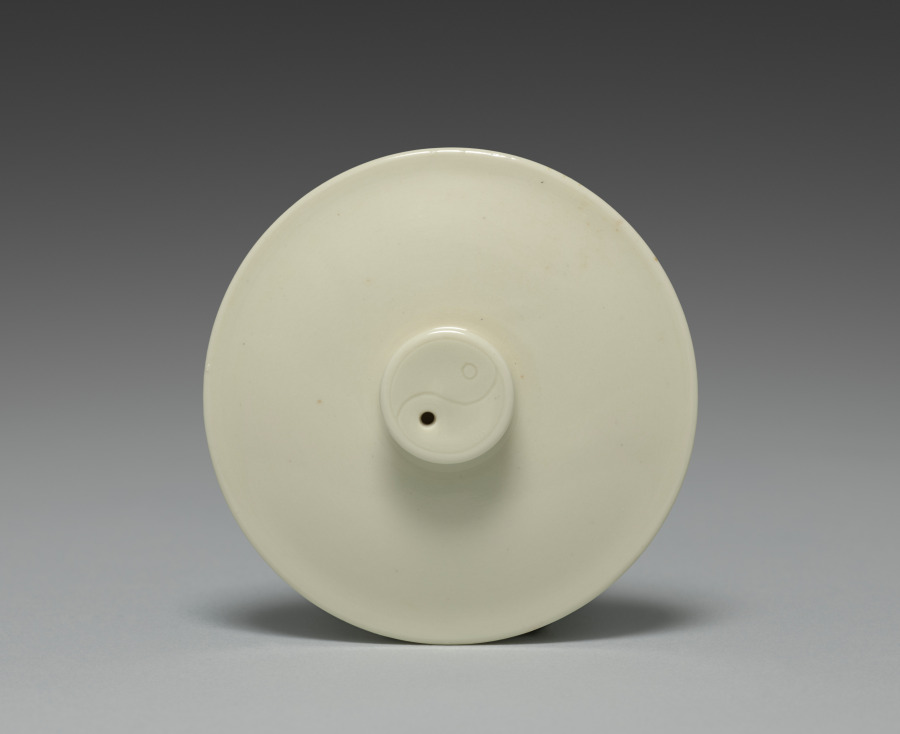
This teapot is of a variety used by advanced sencha practitioners. Called a hōhin, the pot is designed to be held directly by the fingers, with the body touching the upper part of the palm. This shape allows the host to manipulate the pot with a single hand and demonstrate dexterity. Direct contact between the ceramic body and the hand allows the host to closely gauge the temperature of the water within. There are differing grades of sencha, and for the finest one, gyokuro, the water temperature must be carefully regulated to achieve the proper flavor. This vessel is therefore efficacious for preparing this high-quality tea. The hōhin is also extremely portable, so it is well suited for impromptu gatherings. According to its box, this teapot is an example of taihakuji. “Great-white porcelain” was an important early invention Yohei III devised in 1972. It involved the combination of a distinctive translucent, creamy glaze over an ivory-colored clay body.
View the original at Cleveland Museum of Art →Article 1 gives three grounds for regulating a sign: forming good landscape, maintaining scenic character, and preventing danger to the public. Article 3 then lets a prefecture prohibit outdoor advertising outright, by ordinance, in named categories of place.
The cool part. Read the list in Article 3 and it stops being an advertising law. The places where signage can be banned include landscape districts, scenic districts, preservation districts for groups of traditional buildings, the surroundings of designated Important Cultural Properties, and historic sites, places of scenic beauty and natural monuments. The statute protects the view by removing the sentences written across it.
Verify at e-Gov 法令検索 →Use it A motif small enough to blind-deboss, which is where restraint actually shows.
Description source: museum curator text — not generated