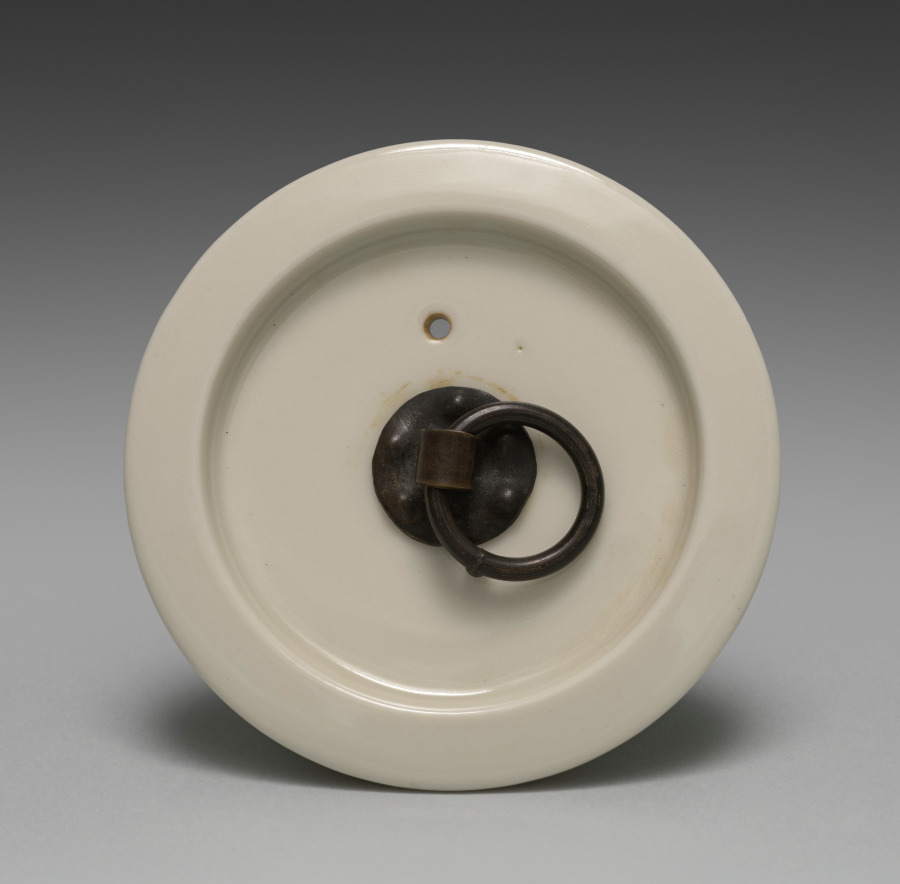
The simple, round form of this teapot is embellished with only a pair of nyoi staff-head motifs, one on each side. Two arched iron handles, parallel to each other, are hooked through holes in raised tabs at the front and back of the shoulders of the pot. The round lid is depressed so that an iron ring handle fastened with an iron clamp passing through the lid can lie flat inside the recessed area. The box is not original to the piece and has an inscription dated to 1960. The person who wrote it clearly admired Yohei III and his efforts to produce works that resembled Chinese ceramics. The inscription describes Yohei’s journey to perfecting these copies but misidentified the Chinese kiln whose wares were the basis for this particular work.
View the original at Cleveland Museum of Art →A craft cannot call itself traditional by taste or reputation. Article 2 sets five conditions, all of which must hold: it is used mainly in daily life, the main part of its making is by hand, it is made by traditional techniques, it is made chiefly from materials traditionally used, and a not-small number of people in a defined area still make it. The designation names the techniques, the materials and the region.
The cool part. Two conditions do quiet work. The first is daily use, so a technique kept alive only for display does not qualify. The fifth is the number of makers: the law will not protect a single surviving genius, because one person is a biography and not an industry. And because the region is written into the designation, the craft is legally attached to a place and cannot move.
Verify at e-Gov 法令検索 →Use it The border is the idea. Use it as an edge treatment and leave the centre empty.
Description source: museum curator text — not generated