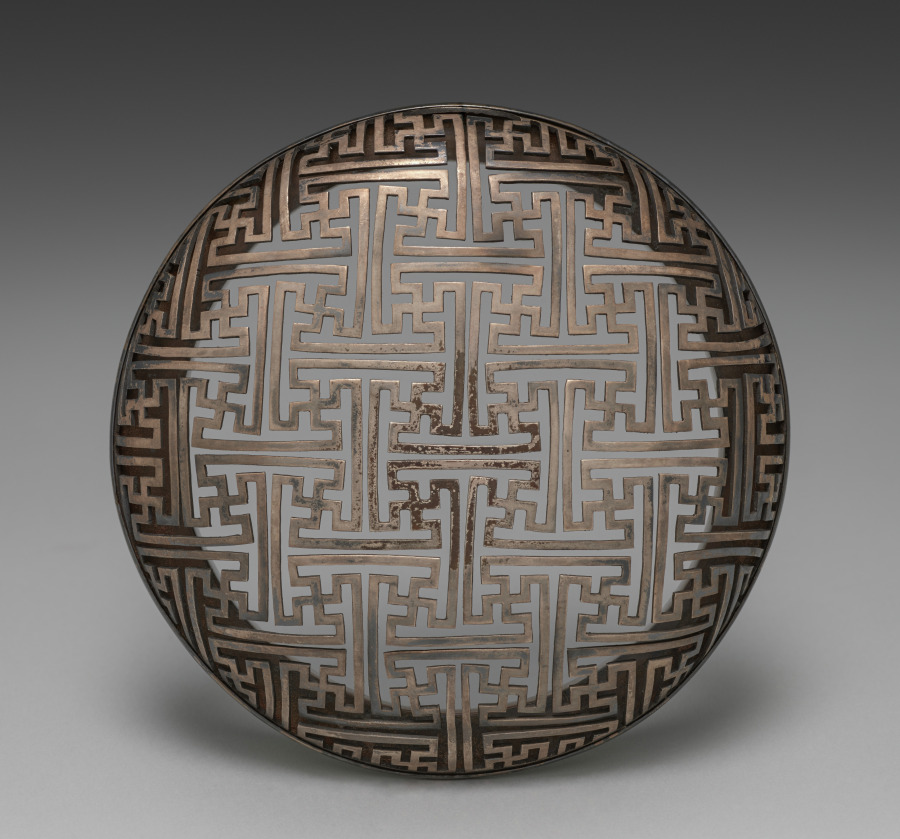
Kyoto-based Japanese ceramist Seifū Yohei III (1851–1914) admired the glaze colors found on Chinese porcelain and tried to replicate them through intensive experimentation. His green and creamy white glazes were particularly well received. The combinations of colors with subtle molded and incised decorations in his ceramics respond powerfully to changes in light, creating a dynamic viewing experience. Names for the glazes, written in ink with a brush on the lids of the custom-made storage boxes for the works, often indicate a specific glaze or ware that had inspired him, even when the resulting color was distinctively his own.
View the original at Cleveland Museum of Art →A statute built to coax privately held work onto public walls. An owner registers a piece with the Commissioner for Cultural Affairs, then contracts with a museum to display it. Article 2 defines a work of art broadly, as paintings, sculpture, crafts and other tangible cultural products that are movable, which is the legal way of saying anything you could carry out of the house.
The cool part. The terms are the interesting part. Article 2 requires the public display contract to run for five years or more, and to contain a clause stating that the parties may not give notice of cancellation. You cannot lend a masterpiece for the tax treatment and then reclaim it when the market turns. Japan concluded the barrier to seeing art was never storage. It was ownership, and the fix was a contract you cannot walk out of.
Verify at e-Gov 法令検索 →Use it Two-colour foil on uncoated stock gets you most of this at production cost.
Description source: museum curator text — not generated