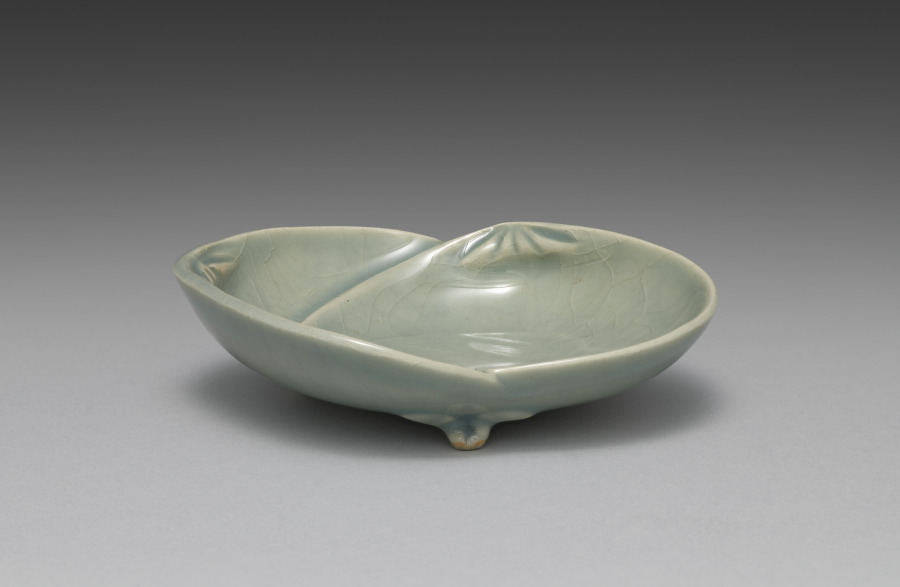
Yohei III’s main output for his sophisticated clientele was in the form of tea sets and dining sets. He created a range of dishes in green glazes. He often produced in pairs, sets of five, or sets of ten. The set of five dishes with a more complex form is described as having a “water-colored glaze” (mizuiroyū). These are shaped like clam half shells, a reference to a game in which shell halves painted with narrative scenes or a variety of motifs must be matched back together by the players. The dishes have molded details to articulate the shell forms, and the crackling across each shell adds another dimension to the surface. Each dish is set on three small feet, formed by a pinched piece of clay and attached to an unglazed area on the underside of the dish. Curiously, while four of the dishes are stamped with the artist’s mark, one has instead a signature carved into the base.
View the original at Cleveland Museum of Art →Article 1 states the purpose plainly: prevent trade in stolen goods, find them quickly, and speed the recovery of victims. Article 2 then defines a used article to include, in the same breath, art objects held for appreciation. Dealing in them requires a licence.
The cool part. Article 16 requires a dealer to record every transaction: the date, the item and quantity, its distinguishing features, and the address, name, occupation and age of the other party. Article 15 requires that a dealer who suspects an item is stolen report it to a police officer immediately. So the antique trade runs on a register the police may read, and a painting becomes a second-hand article the moment it has been used once.
Verify at e-Gov 法令検索 →Use it Two-colour foil on uncoated stock gets you most of this at production cost.
Description source: museum curator text — not generated