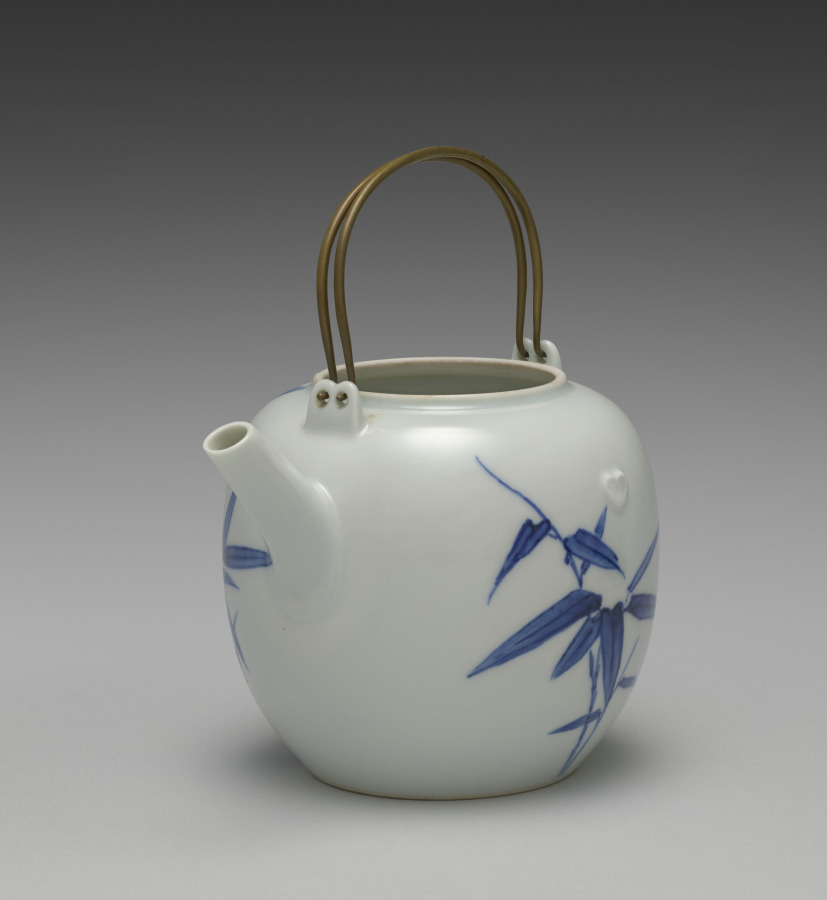
This teapot has a well-balanced design of bamboo in underglaze blue and nyoi staff-head motifs applied to both sides at the shoulder.
View the original at Cleveland Museum of Art →Article 1 gives three grounds for regulating a sign: forming good landscape, maintaining scenic character, and preventing danger to the public. Article 3 then lets a prefecture prohibit outdoor advertising outright, by ordinance, in named categories of place.
The cool part. Read the list in Article 3 and it stops being an advertising law. The places where signage can be banned include landscape districts, scenic districts, preservation districts for groups of traditional buildings, the surroundings of designated Important Cultural Properties, and historic sites, places of scenic beauty and natural monuments. The statute protects the view by removing the sentences written across it.
Verify at e-Gov 法令検索 →Use it Take the ratio, not the picture. It sets a page better than a grid does.
Description source: museum curator text — not generated