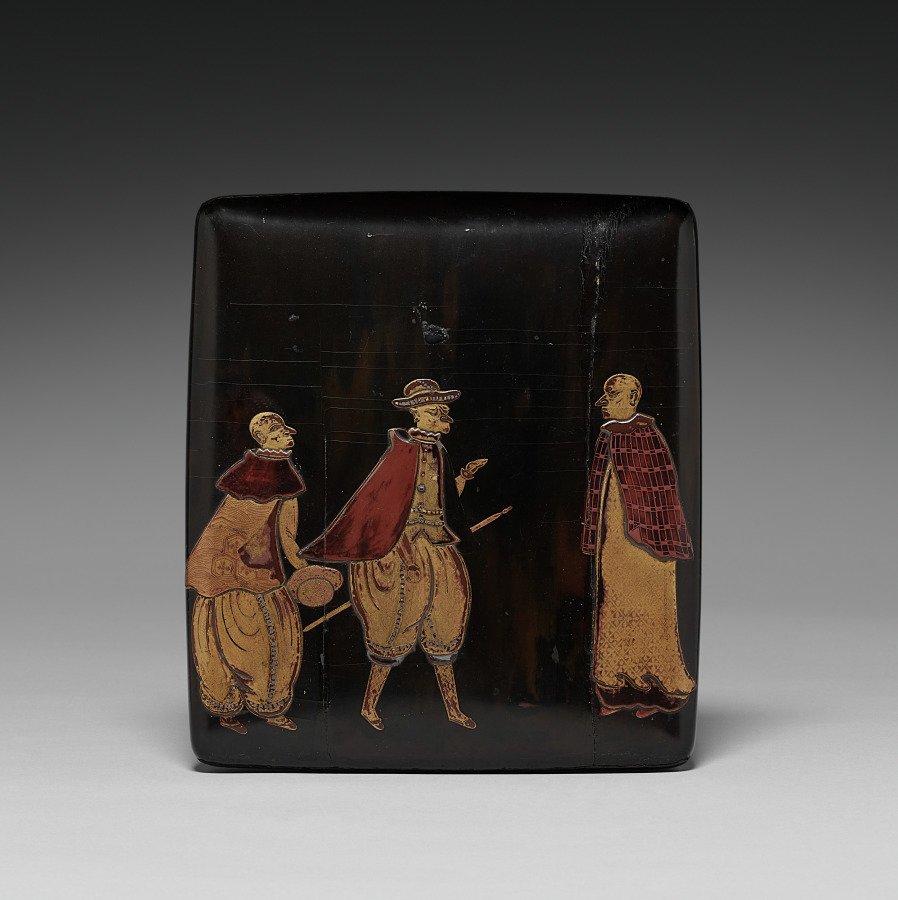
For many Japanese patrons, objects decorated with images of foreigners offered the rare opportunity to see westerners. The two men on the left were likely Portuguese traders, identifiable by their balloon-shaped pants. The man on the right is a Jesuit priest. Portuguese traders arrived in Japan in 1543 and soon after Christian missionaries began to create outposts there. By the early 17th century, Christianity was outlawed and the Portuguese were forced out of Japan. This object was created during the short period when the Portuguese were allowed in Japan.
View the original at Cleveland Museum of Art →Article 2 defines a museum as an institution that collects, keeps and displays materials on history, art, folklore, industry and natural science for public use, carries out research on them, and which has been registered under Chapter 2 of this Act. The registration is not decorative. In law, an unregistered collection open to the public is not a museum.
The cool part. The definition of keeping is given as including raising. That single parenthesis is why a zoo, an aquarium and a botanical garden sit inside museum law in Japan: the collection is allowed to be alive. Article 1 also grounds the statute in the Social Education Act and the Basic Act on Culture and the Arts, which places museums in education first and culture second.
Verify at e-Gov 法令検索 →Use it Palette for a single-colour run: one ink, heavy stock, nothing else on the sheet.
Description source: museum curator text — not generated