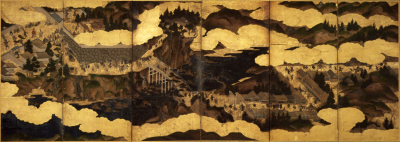
This screen painting depicts the procession and townscape in front of Todaiji Temple during a festival, including views of Kegon Falls and Ushijima Falls in Nikko. The painting also includes detailed depictions of the vermilion-colored bridge before the temple, portraits of attendees, the shops in the townscape of Nikko, and the horse equipment used to ascend the mountains. The screen painting is inferred to have been created during the early Edo period based on the depiction of the white-colored bridge. There are not many similar records available.
東照宮の例祭の行列及び門前町(鉢石宿)、日光山内、華厳滝や裏見滝などの景勝地を描いた屏風絵です。祭礼のほか、朱色に彩色される前の神橋、参詣人の描写や門前の鉢石町の店棚の様子、日光山内、山地へ登る馬の装備などが詳細にわたって描かれています。神橋が白色で描かれている等、江戸時代初期の日光山内を描いた屏風と推定される他にあまり類例の見られない資料です。
View the original at Japan Search →Japan implementing the 1970 UNESCO Convention. When a foreign state reports that cultural property has been stolen from an institution, the Ministry of Foreign Affairs notifies the education ministry, which designates the object as specified foreign cultural property, after consulting the trade ministry. Importing a designated object then requires approval under the foreign exchange and trade law.
The cool part. Article 6 quietly rewrites private law. Under the Civil Code a good-faith purchaser is normally secure against a recovery claim after two years. For designated stolen foreign cultural property, the victim may demand recovery from two years after the theft until ten years have passed. Buying in good faith does not settle the question for a decade, which is roughly how long it takes a stolen object to surface on a legitimate market.
Verify at e-Gov 法令検索 →Use it Take the ratio, not the picture. It sets a page better than a grid does.
Description source: museum curator text, translated — not generated