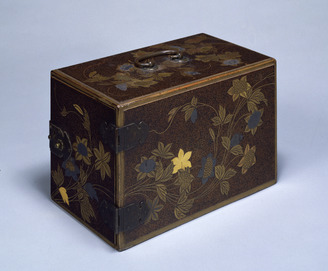
Above is a sakekan (portable chest), adorned with a lacquer coating. It contains three drawers inside, used for carrying small items and documents, as well as writing utensils, among other things. The exterior is decorated with intricate gold leaf designs, interspersed with motifs of iron lines representing flowers and leaves, delicately rendered in calligraphy. This suggests the elegant style of inlaid gold leaf art that emerged during the Edo period. (20120626_h081)
上面に提鐶(さげかん)をつけ、内に三段の引き出しを収めた箪笥。身の回りの小物や書類、筆記具を携行するためなどに使われた。表面には金の薄肉高(うすにくたか)蒔絵に金銀の金貝(かなかい)を交えて、鉄線の花と葉を流麗な筆致で描いている。江戸時代に入り、華美な傾向を深めてゆく蒔絵の様相を示している。(20120626_h081)
View the original at Japan Search →Article 1 gives three grounds for regulating a sign: forming good landscape, maintaining scenic character, and preventing danger to the public. Article 3 then lets a prefecture prohibit outdoor advertising outright, by ordinance, in named categories of place.
The cool part. Read the list in Article 3 and it stops being an advertising law. The places where signage can be banned include landscape districts, scenic districts, preservation districts for groups of traditional buildings, the surroundings of designated Important Cultural Properties, and historic sites, places of scenic beauty and natural monuments. The statute protects the view by removing the sentences written across it.
Verify at e-Gov 法令検索 →Use it Palette for a single-colour run: one ink, heavy stock, nothing else on the sheet.
Description source: museum curator text, translated — not generated