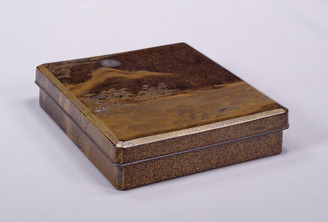
Regarding this scene of Chidori in Hamamatsu, looking across the distant mountains to Tado Island, it can be considered a famous land of Waka poetry representing the residence of Suzaku. The painting boasts a complex lacquered surface with varied highs and lows, and it depicts rocks using meat-ground lacquer technique. Moreover, it adds depictions of flowing water and employs various techniques such as cut gold and inlay mother-of-pearl. This gilded screen painting from the Muromachi period is revealed in its completed form.
遠山を淡路島とみれば、浜松に鳥居のあるこの風景は和歌の名所、住吉を表したものと考えられます。高低ある複雑な漆面を研出す肉合研出蒔絵で岩を表し、流水などを付描で描くほか、切金や金貝など様々な技法を駆使しており、室町時代の完成された蒔絵の姿が窺えます。
View the original at Japan Search →Article 2 defines a museum as an institution that collects, keeps and displays materials on history, art, folklore, industry and natural science for public use, carries out research on them, and which has been registered under Chapter 2 of this Act. The registration is not decorative. In law, an unregistered collection open to the public is not a museum.
The cool part. The definition of keeping is given as including raising. That single parenthesis is why a zoo, an aquarium and a botanical garden sit inside museum law in Japan: the collection is allowed to be alive. Article 1 also grounds the statute in the Social Education Act and the Basic Act on Culture and the Arts, which places museums in education first and culture second.
Verify at e-Gov 法令検索 →Use it Take the ratio, not the picture. It sets a page better than a grid does.
Description source: museum curator text, translated — not generated