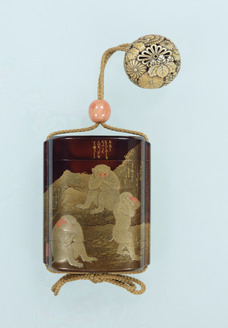
The inrō developed as a decorative item during the Edo period, becoming a small and intricately crafted object with great care given to its design. The intricate carvings on these inrō were highly valued and considered essential for dressing up. This intricacy is exemplified in the connection between the inrō and the origin of the "Seven Monkeys Song" from the Heian period, which was recited by the monk Enchin at the Ise Grand Shrine and is depicted alongside the monkeys in a highly detailed manner. (Ruby Ryogen, compiled by Matsunaga Genpachiro)
印籠は江戸時代に装身具として発達を遂げ、小さく制限が多い器物で意匠に工夫を凝らし、緻密な蒔絵を施すことが考え抜かれた。これは三猿の起源になった「七猿歌」という平安時代の僧侶・良源が日吉大社で詠んだ歌が対応する猿とともに緻密にあらわされている。 るび りょうげん (酒井元樹木氏執筆)
View the original at Japan Search →Article 3 tells libraries what to gather, and the list is wider than books: local materials, local administrative records, works of art, records and film. Article 3 also requires interlibrary lending, travelling collections and mobile libraries, so that the holdings move toward the reader rather than waiting.
The cool part. Article 17 is one sentence and admits nothing. A public library may not collect an admission fee, or any consideration whatsoever, for the use of library materials. Free is not a policy that a budget round can revisit, it is the statute. Article 26 is stranger still: the state and local authorities must not interfere in the work of a private library, and must not give it a subsidy. Independence is protected by withholding the money.
Verify at e-Gov 法令検索 →Use it Two-colour foil on uncoated stock gets you most of this at production cost.
Description source: museum curator text, translated — not generated