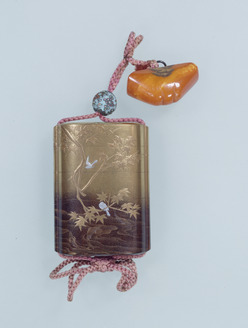
A inrō is a small container, usually filled with medicine, suspended from the waist. From the Edo period onward, it was used more as an accessory than a practical item. The inrō and its holder, sagemono, were worn to hold items such as inrō and other accessories, like fans or tobacco pouches, which were hung from the waist. The inrō and its holder served as decorative clothing accessories, reflecting the diverse interests and creative talents of the wearer.
印籠は、薬を入れて腰に提げる小さな容器。江戸時代中頃以降は実用品というよりアクセサリーとして用いられることが多かった。根付は印籠や煙草入・巾着などを腰に下げるためのホルダー。印籠・根付はつける人の趣味を表わす格好の装身具であり、形や意匠に様々な趣向が凝らされている。
View the original at Japan Search →Article 1 sets a purpose larger than preservation: to preserve cultural properties AND to make use of them, contributing to the cultural advancement of the people and to the progress of world culture. Article 4 turns that outward. An owner must recognise the object as a precious national asset, preserve it for the public, and make it public as far as possible. Ownership here carries a duty to show.
The cool part. "Living National Treasure" appears nowhere in the statute. Article 71 requires that when an Important Intangible Cultural Property is designated, the minister must also certify its holder or holding group. Japan does not register the pot, it registers the potter. Article 96 is the one that reaches ordinary people: if you uncover a shell mound, a dwelling site or a tumulus, you must leave it exactly as it is and notify the Commissioner for Cultural Affairs without delay, and the Commissioner can freeze the ground for up to three months.
Verify at e-Gov 法令検索 →Use it The border is the idea. Use it as an edge treatment and leave the centre empty.
Description source: museum curator text, translated — not generated