Quiet reading✦No ads, ever

✦Corporate brand & media services✦Made in Virginia Beach since 1997✦

Huang Goodman · Art Forgotten

Art Forgotten

Art from public museum collections. A mismatched real Japanese law, and some other factoids.

Every object, image and description comes from the museum's own catalogue record, and every object links to its original. Japanese records are machine-translated into English; the museum's Japanese is kept beside the translation because it is the authoritative form. Each law carries its official number and links to e-Gov 法令検索, the Japanese government's statute database.

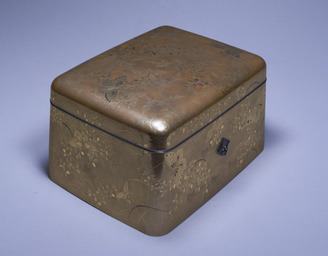
萩蝶蒔絵手箱
{萩蝶蒔絵手箱 · 沢田宗沢斎作 · 明治25年(1892) / Meiji era, 1892 · Japan Search · 国立国会図書館}
Title: Butterfly Cabinet This exquisite piece is referred to as the "Butterfly Cabinet." Its intricate design showcases an array of butterflies, meticulously arranged and preserved within the wooden container. The delicate craftsmanship is evident in the detailed way each butterfly is displayed, allowing viewers to appreciate their beauty up close. The cabinet features a series of small, individually compartments, each one holding a single butterfly. The interiors of these compartments are adorned with various decorative patterns, adding an extra layer of visual interest to the piece. The exterior of the cabinet is equally impressive, with intricate carvings and elaborate designs covering every surface. The overall effect is one of sophistication and elegance, making the Butterfly Cabinet a truly unique and captivating work of art. The butterflies themselves are sourced from various regions around the world and display a stunning array of colors, shapes, and sizes. Each one is carefully selected and expertly preserved, ensuring that their vibrant colors and intricate patterns remain intact for generations to come. The Butterfly Cabinet is not just a decorative object, but also a testament to the beauty and fragility of nature. It invites us to pause and appreciate the intricacies of the natural world, reminding us of the importance of preserving and celebrating the diversity of life on our planet. · Wada Soetsu created [this artwork] by Wada Soetsu.

A bamboo box filled with bamboo, grass, and butterflies in its entirety. Gold leaf and thick lacquer are the main themes, with pearls and metal interspersed, creating clear and radiant brilliance. Sawa Tadasuke of the Sawa school learned lacquerware from the Kaga school, leaving behind meticulous works that carry on the tradition. He has won numerous awards at exhibitions and competitions, representing one of the prominent lacquer artists from Kinashi.

萩に忍草、薄、胡蝶を全面に配した手箱。金地に高蒔絵を主調として、金貝や鋲を交えて澄明な輝きを生み出しています。沢田宗沢斎は加賀蒔絵を学んだ蒔絵師で、その伝統を継ぐ精巧な作品を残しました。博覧会や競技会で多くの賞を得ており、金沢を代表する蒔絵師の一人です。

View the original at Japan Search →
The law
屋外広告物法
Outdoor Advertising Act
昭和二十四年法律第百八十九号 · Act No. 189 of 1949

Article 1 gives three grounds for regulating a sign: forming good landscape, maintaining scenic character, and preventing danger to the public. Article 3 then lets a prefecture prohibit outdoor advertising outright, by ordinance, in named categories of place.

The cool part. Read the list in Article 3 and it stops being an advertising law. The places where signage can be banned include landscape districts, scenic districts, preservation districts for groups of traditional buildings, the surroundings of designated Important Cultural Properties, and historic sites, places of scenic beauty and natural monuments. The statute protects the view by removing the sentences written across it.

Verify at e-Gov 法令検索 →

Use it A motif small enough to blind-deboss, which is where restraint actually shows.

Description source: museum curator text, translated — not generated