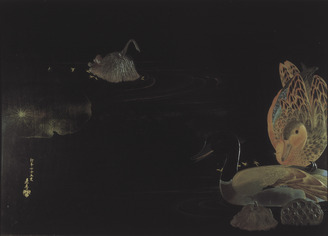
The painting is created on a polished lacquer surface, using techniques such as togidashi and makiboka, to express the ripples on the water's surface. The lotus seeds depict a weathered, rusted look, while the male and female ducks in the foreground express a sense of volume, with meticulous attention to detail in their feathers. The artist's skill in conveying the texture and feeling of the motif is showcased in this remarkable work.
磨き上げられた黒漆塗の地に研出(とぎだし)蒔絵や蒔暈(まきぼか)しを駆使して、水面の揺らめきを表現している。蓮の実は錆(さび)上げで枯れたさまを表わし、雌雄の鴨は高蒔絵で量感を表現しながら、羽毛を精緻に描き分ける。モチーフの質感表現を追求した是真(ぜしん)の技巧が、いかんなく発揮された大作である。
View the original at Japan Search →Article 1 states the aim as a beautiful and dignified national land, and it covers not only cities but farming, mountain and fishing villages. Inside a landscape planning area, Article 16 requires advance notification of new building, extension, rebuilding, relocation, and any repair or alteration that changes the exterior. Landscape Districts go further and impose direct restrictions on the form and design of buildings.
The cool part. Read Article 16 to the end of the sentence. A change of colour is listed alongside new construction as an act you must notify. Repainting your building is, in law, the same category of event as putting up a new one. This is the machinery behind the muted shopfronts of Kyoto. The brown coffee-shop sign is not a marketing choice, it is compliance.
Verify at e-Gov 法令検索 →Use it A motif small enough to blind-deboss, which is where restraint actually shows.
Description source: museum curator text, translated — not generated