Huang Goodman · Art Forgotten

Art Forgotten

Art from public museum collections. A mismatched real Japanese law, and some other factoids.

Every object, image and description comes from the museum's own catalogue record, and every object links to its original. Japanese records are machine-translated into English; the museum's Japanese is kept beside the translation because it is the authoritative form. Each law carries its official number and links to e-Gov 法令検索, the Japanese government's statute database.

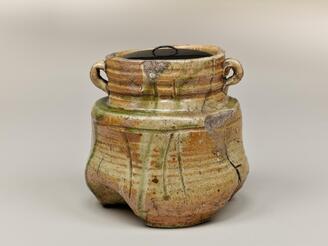
耳付水指
{耳付水指 · 伊賀 · 江戸時代・17世紀 / Edo period, 17th century · Japan Search · 国立国会図書館}
Ear-touching Water Finger This catalogue introduces the art pieces under the theme of "Ear-touching Water Finger." The water, a fundamental element of life, is presented in various forms and expressions throughout the exhibition. The artists have explored the relationship between water and the human sense of touch, particularly the ear, creating unique and thought-provoking pieces. The first artwork is titled "Water's Whisper." This installation invites visitors to touch a wall of water, allowing them to experience the sensation of water droplets against their skin. The sound of the water gently touching the wall creates an immersive environment, inviting contemplation and reflection. The next piece, "Raindrops," is a series of sculptures that represent raindrops in various sizes and shapes. The artist has skillfully captured the essence of raindrops, inviting visitors to touch and feel the textures, while also appreciating their visual beauty. Another artwork, "Underwater Symphony," is a multimedia installation that transports visitors into an underwater world. The combination of sound, light, and water creates a mesmerizing and calming atmosphere, allowing visitors to explore the sensory experience of being submerged in water. The last artwork, "Finger Dance," is an interactive installation that invites visitors to touch and move the water, creating ripples and waves. The sound of the water moving against the touch of the hand creates a rhythmic and meditative experience, encouraging visitors to engage with the artwork in a tactile and immersive way. Throughout the exhibition, visitors are invited to explore the theme of "Ear-touching Water Finger," experiencing the relationship between water and the human sense of touch in various forms and expressions. These artworks offer a unique and thought-provoking perspective on the connection between our sense of touch and the natural world, inviting contemplation and reflection. · Iga: This catalogue introduces artworks from the Iga region. Iga is located in Mie Prefecture, Japan, and is known for its long history and unique traditional arts. The artworks presented in this catalogue include various forms of pottery and ceramics, as well as textiles and metalwork. These pieces reflect the rich cultural heritage of Iga and showcase the skill and creativity of its artisans. Throughout history, Iga has been influenced by various artistic styles and trends, but its distinct identity has remained strong. This catalogue aims to provide a comprehensive overview of Iga's artistic traditions and to promote a deeper appreciation for the beauty and significance of its art.

Iga pottery*igasan* was established in the Tenno period (1573-91). It functioned as a kiln for making tea utensils in the Iga city, Mie prefecture (old Ayan Town). It employed traditional techniques to create high-quality works with watermarks and flower marks. The watermark on this piece has a three-sided base and uneven ears on the neck. The shaping is grand and expressive.

伊賀焼*いが*は天正年間(1573~91)に信楽焼を母に茶道具専焼の窯として三重県伊賀市(旧阿山*あやま*町)に開窯。伝統の焼締技法で水指・花入に優品を作った。この水指も底を三方からたわめ、頸部に左右非対称の耳を貼り付ける。豪快な作為に富む造形である。

View the original at Japan Search →
The law
伝統的工芸品産業の振興に関する法律
Act on the Promotion of Traditional Craft Industries
昭和四十九年法律第五十七号 · Act No. 57 of 1974

A craft cannot call itself traditional by taste or reputation. Article 2 sets five conditions, all of which must hold: it is used mainly in daily life, the main part of its making is by hand, it is made by traditional techniques, it is made chiefly from materials traditionally used, and a not-small number of people in a defined area still make it. The designation names the techniques, the materials and the region.

The cool part. Two conditions do quiet work. The first is daily use, so a technique kept alive only for display does not qualify. The fifth is the number of makers: the law will not protect a single surviving genius, because one person is a biography and not an industry. And because the region is written into the designation, the craft is legally attached to a place and cannot move.

Verify at e-Gov 法令検索 →

Use it Take the ratio, not the picture. It sets a page better than a grid does.

Description source: museum curator text, translated — not generated