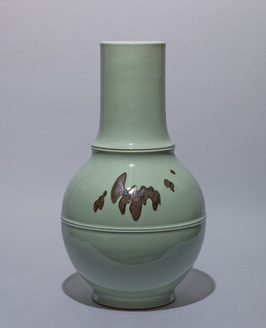
Three-day Clear Wind and Yohei were the first ceramic artisans at the imperial court. The foundation of their pottery was placed in Chinese ceramic research. The large vessel named "Mystic Colored Glazed Bottle" by Yohei was inspired by the flying green glaze of the Longquan Kiln in China. In the Taisho 1st year, they donated this exhibit, which includes a shared box with their name inscribed on the lid, to the museum.
陶磁で最初の帝室技芸員となった三代清風与平は、作陶の基盤を中国陶磁研究に置きました。与平が「秘色磁花瓶」と呼ぶこの大瓶は、中国龍泉窯の飛青磁に発想を得たものです。大正元年に自ら博物館へ寄贈し、箱の蓋裏に名前を記した共箱をともないます。
View the original at Japan Search →Article 1 describes the Ainu as the indigenous people of the northern part of the Japanese archipelago and of Hokkaido in particular, and cites international circumstances concerning indigenous peoples as a reason for acting. It requires the government to set a basic policy, and lets municipalities draw up regional plans for approval by the Prime Minister.
The cool part. The definition in Article 2 is the part to sit with. Ainu culture means the Ainu language, and the ways of living, music, dance, crafts and other cultural products inherited among the Ainu, and cultural products developed from these. That final clause refuses to freeze the culture at a date, and treats what is made next as equally the thing being protected. The Act then reaches into trademark law, reducing or waiving registration fees for regional collective trademarks used by approved projects.
Verify at e-Gov 法令検索 →Use it Two-colour foil on uncoated stock gets you most of this at production cost.
Description source: museum curator text, translated — not generated