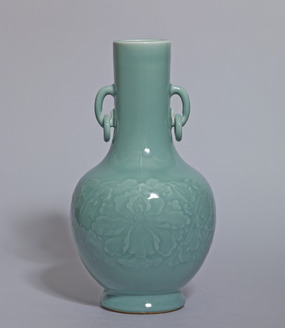
During the Meiji period, the first Miyagawa Kōzan lived and was well-known for his extraordinary techniques and unique style. However, in the late Meiji period, he learned new worlds from Chinese porcelain. One of his representative works from this period is this, where the peonies and bamboo softly emerge from the cobalt blue glaze, and the surroundings are not melted, creating a playful contrast. High levels of skill can be seen in this.
明治期に活躍した初代宮川香山は、超絶技巧的で奇抜な作風がよく知られますが、明治後期になると中国陶磁に学んだ新しい世界を作り出しました。これはその後期の代表作で、青磁釉から牡丹唐草が柔らかく浮かび、左右の環は熔着しない遊環とするなど高い技術がみられます。
View the original at Japan Search →A national statute written for one city. Article 1 recites the beauty of Kyoto and its historically, culturally and artistically important position in the world, and gives two purposes: to raise international culture and serve the ideal of permanent world peace, and to contribute to the economic recovery of Japan. It was passed five years after the war ended.
The cool part. Article 3 lets Kyoto designate culture tourism preservation districts and, by ordinance, prohibit building, rebuilding, removal, changes to the shape of the land and the cutting of bamboo, trees and stone, with compensation for ordinary loss. Then Article 4 does something statutes almost never do. It places a duty on the mayor personally: in the spirit of local autonomy, and with the cooperation of residents, the mayor must engage in ceaseless activity to complete the city. Nara received its own Act, number 250, the day before.
Verify at e-Gov 法令検索 →Use it A motif small enough to blind-deboss, which is where restraint actually shows.
Description source: museum curator text, translated — not generated