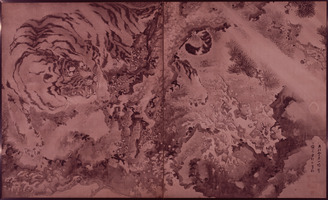
Shigemasa was an active painter during the late Edo period, with Kyoto as his base. He is believed to have originated from Shiga or Kaga, and worked for the Arisugawa-Nomiya and Endo families, among others. He is known for his expertise in painting tigers, and the vibrating brushstrokes that characterize his work are evident in this illustration.
岸駒は、江戸後期に京都を中心に活躍した画家。越中あるいは加賀の出身とされ、京に出て、有栖川宮(ありすがわのみや)家や前田家に仕えるなど活躍し、岸派の祖となりました。虎の絵を得意としたことで知られ、本図にもみられる震えるような運筆が岸駒の特徴です。
View the original at Japan Search →Article 2 defines a museum as an institution that collects, keeps and displays materials on history, art, folklore, industry and natural science for public use, carries out research on them, and which has been registered under Chapter 2 of this Act. The registration is not decorative. In law, an unregistered collection open to the public is not a museum.
The cool part. The definition of keeping is given as including raising. That single parenthesis is why a zoo, an aquarium and a botanical garden sit inside museum law in Japan: the collection is allowed to be alive. Article 1 also grounds the statute in the Social Education Act and the Basic Act on Culture and the Arts, which places museums in education first and culture second.
Verify at e-Gov 法令検索 →Use it Take the ratio, not the picture. It sets a page better than a grid does.
Description source: museum curator text, translated — not generated