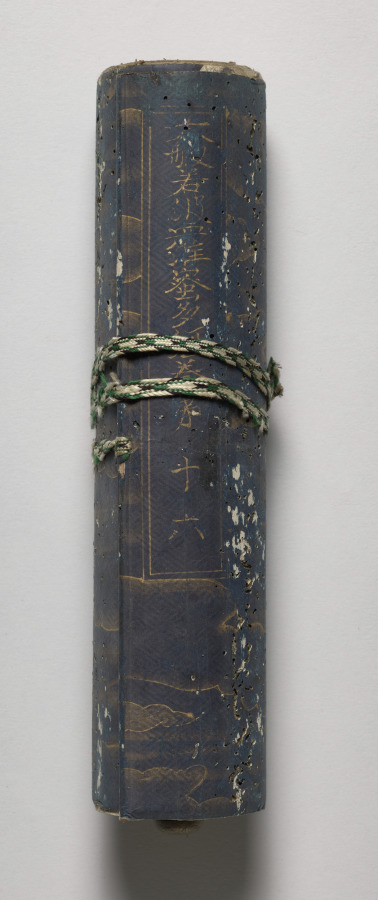
This scroll is part of the 600-volume Great Perfection of Wisdom Sutra. The sacred text addresses the perfection of wisdom and the nonsubstantiality of all phenomena, or the emptiness of all things. It takes the form of Shakyamuni Buddha’s preaching at four locations. This scroll is from the Perfection of Wisdom in 100,000 Lines, which occupies the first 400 volumes. At one time, religious clergy kept all the scrolls in a lacquered wood repository on view nearby. They are now too fragile to open and we will conserve them over time.
View the original at Cleveland Museum of Art →Japan implementing the 1970 UNESCO Convention. When a foreign state reports that cultural property has been stolen from an institution, the Ministry of Foreign Affairs notifies the education ministry, which designates the object as specified foreign cultural property, after consulting the trade ministry. Importing a designated object then requires approval under the foreign exchange and trade law.
The cool part. Article 6 quietly rewrites private law. Under the Civil Code a good-faith purchaser is normally secure against a recovery claim after two years. For designated stolen foreign cultural property, the victim may demand recovery from two years after the theft until ten years have passed. Buying in good faith does not settle the question for a decade, which is roughly how long it takes a stolen object to surface on a legitimate market.
Verify at e-Gov 法令検索 →Use it Two-colour foil on uncoated stock gets you most of this at production cost.
Description source: museum curator text — not generated