Quiet reading✦No ads, ever

✦Corporate brand & media services✦Made in Virginia Beach since 1997✦

Huang Goodman · Art Forgotten

Art Forgotten

Art from public museum collections. A mismatched real Japanese law, and some other factoids.

Every object, image and description comes from the museum's own catalogue record, and every object links to its original. Japanese records are machine-translated into English; the museum's Japanese is kept beside the translation because it is the authoritative form. Each law carries its official number and links to e-Gov 法令検索, the Japanese government's statute database.

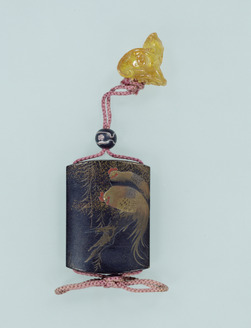
鶏蒔絵印籠
{鶏蒔絵印籠 · 底裏金蒔銘「桃葉(花押)」 · 江戸時代・19世紀 / Edo period, 19th century · Japan Search · 国立国会図書館}
Chicken Scroll Painting This scroll painting is titled "Chicken." The artwork is depicting chickens in various poses and activities. The painting is done in a traditional Japanese style, with intricate details and vibrant colors. The chickens are portrayed in a lively and dynamic way, showcasing their unique personalities. The painting is scroll-sized, allowing it to be rolled up for easy storage and transportation. The scroll is made from high-quality paper and silk, ensuring the longevity of the artwork. The painting is a precious and valuable addition to any collection of Japanese art. · Reverse gold inlay seal: "Peonia (Flower Imprint)

A inrō is a small container, often worn suspended from the waist. From the Edo period onwards, it was used more as an accessory than a practical item. Animals motifs are frequently found on inrō, particularly chickens, which can be seen in various techniques such as boroboru, karakami, and niji-maki.

印籠は薬を入れて腰に提げる小さな容器。江戸時代中頃以降は実用品というより、装身具(アクセサリー)として用いられることが多かった。印籠には動物の文様がしばしば見られ、特に鶏は蒔絵・螺鈿・七宝など各種技法を用いた例が見い出される。

View the original at Japan Search →
The law
文化財の不法な輸出入等の規制等に関する法律
Act on Controls on the Illicit Export and Import of Cultural Property
平成十四年法律第八十一号 · Act No. 81 of 2002

Japan implementing the 1970 UNESCO Convention. When a foreign state reports that cultural property has been stolen from an institution, the Ministry of Foreign Affairs notifies the education ministry, which designates the object as specified foreign cultural property, after consulting the trade ministry. Importing a designated object then requires approval under the foreign exchange and trade law.

The cool part. Article 6 quietly rewrites private law. Under the Civil Code a good-faith purchaser is normally secure against a recovery claim after two years. For designated stolen foreign cultural property, the victim may demand recovery from two years after the theft until ten years have passed. Buying in good faith does not settle the question for a decade, which is roughly how long it takes a stolen object to surface on a legitimate market.

Verify at e-Gov 法令検索 →

Use it Two-colour foil on uncoated stock gets you most of this at production cost.

Description source: museum curator text, translated — not generated