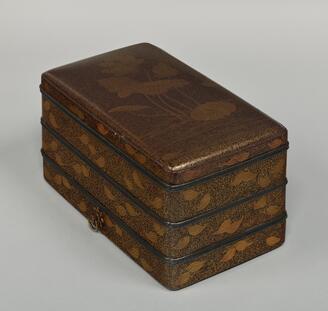
Example of a lacquer box decorated with paintings. It has a long and three-tiered rectangular shape, and a design of lotus ponds is depicted in relief lacquer painting. In this piece, the technique of finely representing lotus flowers and leaves with the lacquer-cut method is used, making it a typical work from the Muromachi period that can be placed in a traditional style.
蒔絵で装飾した経箱の典型を示した作例。長方形で三段重ねの形式をとり、研出蒔絵で蓮池文様を描いています。本作では梨子地[なしじ]に描割[かきわり]の技法を駆使して蓮の花や葉脈を精細に表しており、伝統的な様式を踏襲した室町時代の作と位置づけられます。
View the original at Japan Search →A craft cannot call itself traditional by taste or reputation. Article 2 sets five conditions, all of which must hold: it is used mainly in daily life, the main part of its making is by hand, it is made by traditional techniques, it is made chiefly from materials traditionally used, and a not-small number of people in a defined area still make it. The designation names the techniques, the materials and the region.
The cool part. Two conditions do quiet work. The first is daily use, so a technique kept alive only for display does not qualify. The fifth is the number of makers: the law will not protect a single surviving genius, because one person is a biography and not an industry. And because the region is written into the designation, the craft is legally attached to a place and cannot move.
Verify at e-Gov 法令検索 →Use it Palette for a single-colour run: one ink, heavy stock, nothing else on the sheet.
Description source: museum curator text, translated — not generated