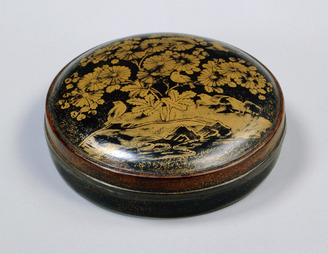
A gold lacquered box with paintings of wateredge chrysanthemums and small birds. The lid, the underside, and the bottom all have chrysanthemum branches and flying birds scattered around. Initially, it was thought to contain small items in the box. The simple chrysanthemums depicted in the lacquerwork are often seen in medieval crafts, exuding an ancient grace.
金の研出蒔絵だけで、水際の菊花や小鳥を描いた鏡箱。蓋裏や底裏にも、菊の折枝や飛鳥が散らされています。もとは身の回りの小物を収めた手箱の内容品と推定。研出蒔絵で描く単弁の菊は、中世の意匠にしばしば見受けられるもので、古雅な趣を見せています。
View the original at Japan Search →A weapons statute that contains the most important art registry in the country. Article 2 defines a sword by measurement: a blade of fifteen centimetres or more for a sword, spear or naginata, five and a half for a dagger. Article 14 then carves out an exception. The prefectural board of education registers old firearms of value as art or antiques, and swords of value as art, on the basis of an appraisal by registration examiners appointed for their scholarly knowledge.
The cool part. A Japanese sword is lawful to own because it has been certified as art. Not because it was disarmed, not because it was licensed as a weapon. The judgement is made by the board of education, and Article 14 then requires the board to notify the prefectural public safety commission of what it has decided. The culture side rules, and the police are informed afterwards. Fail the appraisal and the same object becomes contraband.
Verify at e-Gov 法令検索 →Use it Two-colour foil on uncoated stock gets you most of this at production cost.
Description source: museum curator text, translated — not generated