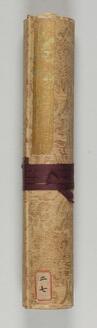
This scroll painting illustrates various merits of the Earth Store Bodhisattva. It is based on a collection of stories called "Land Store Bodhisattva Experiences" compiled by a person named Joukin in China. Therefore, the setting of the story is in China, and the characters' clothing, tiled buildings, and other elements are carefully depicted with a focus on China.
地蔵菩薩の様々なご利益を描いた絵巻。中国で常謹*じょうきん*という人物が編んだ『地蔵菩薩応験記*じぞうぼさつおうげんき*』という説話集をもとに描かれています。そのため物語の舞台も中国で、人物の装束やタイル張りの建物など、中国を意識し工夫して描かれています。
View the original at Japan Search →A weapons statute that contains the most important art registry in the country. Article 2 defines a sword by measurement: a blade of fifteen centimetres or more for a sword, spear or naginata, five and a half for a dagger. Article 14 then carves out an exception. The prefectural board of education registers old firearms of value as art or antiques, and swords of value as art, on the basis of an appraisal by registration examiners appointed for their scholarly knowledge.
The cool part. A Japanese sword is lawful to own because it has been certified as art. Not because it was disarmed, not because it was licensed as a weapon. The judgement is made by the board of education, and Article 14 then requires the board to notify the prefectural public safety commission of what it has decided. The culture side rules, and the police are informed afterwards. Fail the appraisal and the same object becomes contraband.
Verify at e-Gov 法令検索 →Use it A motif small enough to blind-deboss, which is where restraint actually shows.
Description source: museum curator text, translated — not generated