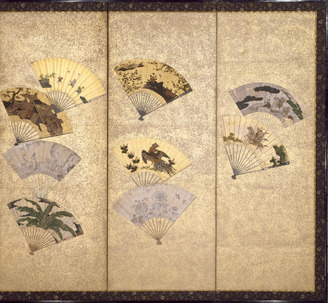
During the Muromachi period in the middle to Edo period, folding screens with painted fan motifs were collected and reassembled as screens. Each one features intriguing themes, but the fan screen depicting Toshogu Shrine is believed to be one of the oldest surviving examples of popular arts from that era.
室町時代の中期から江戸時代にいたる間に描かれた扇面画をある時期に収集し、屏風に仕立て直したものである。それぞれ興味ある画題が描かれているが、ことに清水寺を描いた扇面は、現存する風俗画のうちもっとも古い時代の制作と考えられる。
View the original at Japan Search →Article 3 tells libraries what to gather, and the list is wider than books: local materials, local administrative records, works of art, records and film. Article 3 also requires interlibrary lending, travelling collections and mobile libraries, so that the holdings move toward the reader rather than waiting.
The cool part. Article 17 is one sentence and admits nothing. A public library may not collect an admission fee, or any consideration whatsoever, for the use of library materials. Free is not a policy that a budget round can revisit, it is the statute. Article 26 is stranger still: the state and local authorities must not interfere in the work of a private library, and must not give it a subsidy. Independence is protected by withholding the money.
Verify at e-Gov 法令検索 →Use it Palette for a single-colour run: one ink, heavy stock, nothing else on the sheet.
Description source: museum curator text, translated — not generated