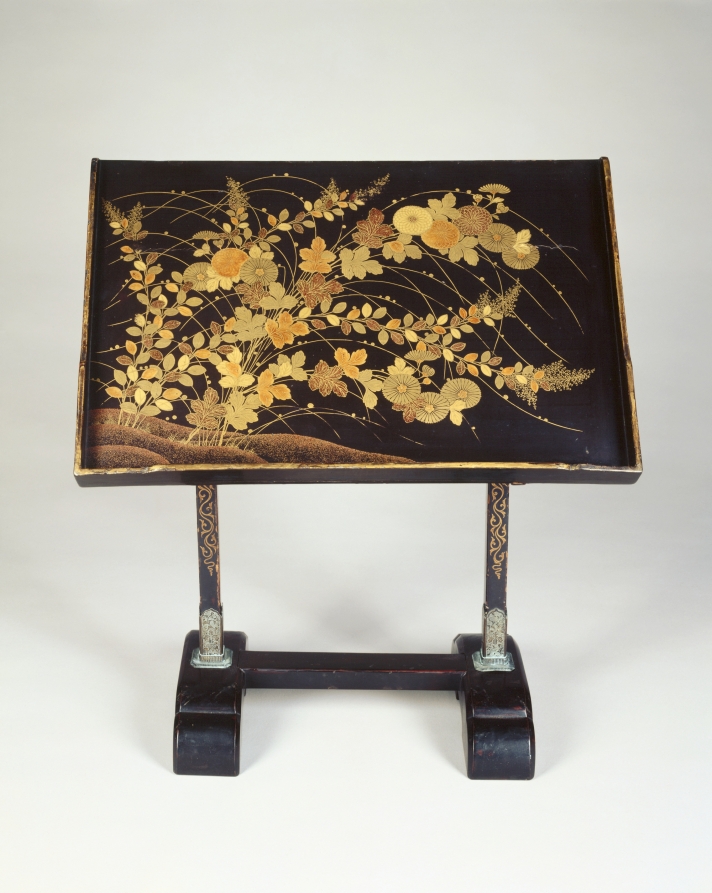
Japanese reading stands often incorporate motifs associated with seasonal poetry. The combination of long, narrow, miscanthus grass, bush clover with its small, ovoid leaves, and chrysanthemum with its many-petaled blossoms is classic autumnal imagery. One lacquer technique featured prominently on the stand is sprinkled gold in low relief (hiramaki-e). Pear-skin ground design (nashiji-e) is used for the slopes of the ground and in some of the leaves.
View the original at Cleveland Museum of Art →Article 3 tells libraries what to gather, and the list is wider than books: local materials, local administrative records, works of art, records and film. Article 3 also requires interlibrary lending, travelling collections and mobile libraries, so that the holdings move toward the reader rather than waiting.
The cool part. Article 17 is one sentence and admits nothing. A public library may not collect an admission fee, or any consideration whatsoever, for the use of library materials. Free is not a policy that a budget round can revisit, it is the statute. Article 26 is stranger still: the state and local authorities must not interfere in the work of a private library, and must not give it a subsidy. Independence is protected by withholding the money.
Verify at e-Gov 法令検索 →Use it Palette for a single-colour run: one ink, heavy stock, nothing else on the sheet.
Description source: museum curator text — not generated