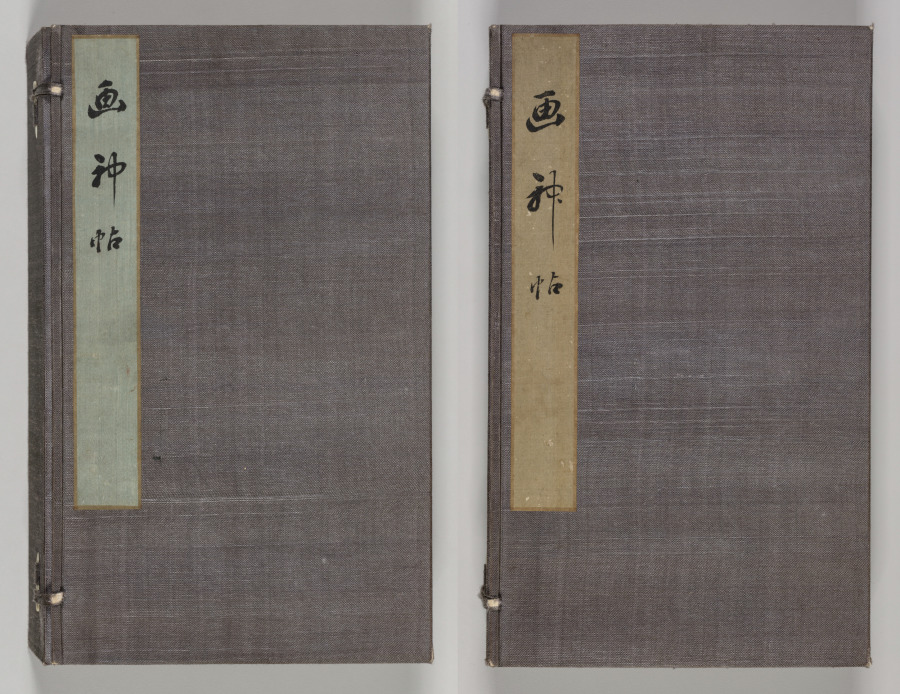
Traditionally, young painters in Japan began their studies with an established master painter. The master's compositions invariably became models that the apprentice copied to learn various ink and brush techniques. Shukuya was a pupil of the famous Kyoto artist Ike Taiga, whose style is reflected in these sketches of rocks, trees, and mountains.
View the original at Cleveland Museum of Art →Article 1 states the purpose plainly: prevent trade in stolen goods, find them quickly, and speed the recovery of victims. Article 2 then defines a used article to include, in the same breath, art objects held for appreciation. Dealing in them requires a licence.
The cool part. Article 16 requires a dealer to record every transaction: the date, the item and quantity, its distinguishing features, and the address, name, occupation and age of the other party. Article 15 requires that a dealer who suspects an item is stolen report it to a police officer immediately. So the antique trade runs on a register the police may read, and a painting becomes a second-hand article the moment it has been used once.
Verify at e-Gov 法令検索 →Use it Take the ratio, not the picture. It sets a page better than a grid does.
Description source: museum curator text — not generated