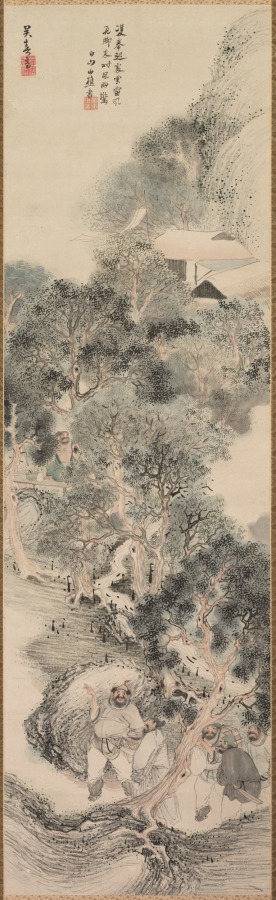
The Chinese literary classic Water Margin is set in the 1120s and tells the story of 108 outlaws who first rebel against the government and then join forces with it. This painting depicts an episode in which hero Wu Song reclaims the tavern Happy Forest for its rightful owner, the prison warden’s son, Shi En. To prepare for the fight, Wu Song drinks a lot of wine. The painting was inscribed with a quote in which an ally describes Wu Song’s fighting style. It reads as follows: Where his twin fists rise, clouds and thunder roar, When his flying kick comes, wind and rain tremble.
View the original at Cleveland Museum of Art →Article 2 defines a museum as an institution that collects, keeps and displays materials on history, art, folklore, industry and natural science for public use, carries out research on them, and which has been registered under Chapter 2 of this Act. The registration is not decorative. In law, an unregistered collection open to the public is not a museum.
The cool part. The definition of keeping is given as including raising. That single parenthesis is why a zoo, an aquarium and a botanical garden sit inside museum law in Japan: the collection is allowed to be alive. Article 1 also grounds the statute in the Social Education Act and the Basic Act on Culture and the Arts, which places museums in education first and culture second.
Verify at e-Gov 法令検索 →Use it Two-colour foil on uncoated stock gets you most of this at production cost.
Description source: museum curator text — not generated