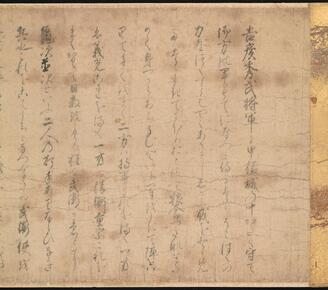
This scroll painting depicts battles that occurred in the late Heian period, in the northeastern region of Japan. It illustrates disputes within the powerful samurai family, the Asakura, and the intervention of the Minamoto family (the Yoshie branch) in these disputes. The Minamoto were prominent warriors of the late Heian period, with ancestors including Minamoto Yoritomo, who opened the Kamakura shogunate, and Takeda Nobutada, who opened the Muromachi shogunate. This scroll consists of three volumes, with the one introduced here being one of the middle volumes. One notable feature of this scroll is its large size. The painting's height is approximately 45 centimeters, making it one of the larger pieces in the scroll. The large size allows for clear depiction of the figures and their facial expressions. Additionally, the use of bright colors adds to the lively portrayal of battle scenes. This color usage is characteristic of paintings from the Southern Court period. Moreover, it is mentioned in the scroll that the artwork was created in 1347, the painter was Hidano Kamikore Hisa, and the explanatory text was written by Jimyoin-in Yasu no bō. At that time, it was unusual for the creators of art and writing to be clearly identified, making this an precious work. The calligraphy for the scroll was composed by the monk Gensei.
平安時代後期、東北地方で起こった戦乱を描いた絵巻です。当時東北地方で力を持っていた豪族、清原氏の一族の内部で起こった争いとその争いに介入した源義家(みなもとのよしいえ)の活躍を描いています。源義家は平安時代後期の武将で、鎌倉幕府を開いた源頼朝、室町幕府を開いた足利尊氏の祖先にあたる人物です。絵巻は3巻が残っており、今回ご紹介するのはそのうちの中巻です。 この絵巻の特徴は、何といってもサイズの大きさ。画面の天地が約45センチメートルもあり、絵巻の中でも大きい部類に入ります。画面が大きい分、人物も大きく描かれており、その表情まではっきりと見ることができます。また色使いにもご注目ください。明るい色使いで戦場の場面が軽快に描かれています。こういった色使いは南北朝時代に作られた絵巻に特有のものです。 さらにこの絵巻には、貞和三(1347)年の制作、絵は飛騨守惟久(ひだのかみこれひさ)、内容を説明する詞書(ことばがき)は持明院保脩(じみょういんやすのぶ)によるものであるということが記されています。この当時、絵や書を書いた人物がはっきり分かっていることは珍しく、貴重な作品といえます。 絵巻の筋書きは比叡山の僧、玄慧 (げんえ) が起草したこともわかっています。武士ではない人物の視点から描かれた合戦絵巻であるということを踏まえて見てみるのも、この絵巻の楽しみ方の一つかもしれません。 平安時代後期、陸奥・出羽(東北地方)で起こった清原氏の内乱と源氏の祖・八幡太郎源義家の活躍を描いた合戦絵巻です。現在は三巻が残り、通常の絵巻よりも大きな料紙を用いているのが特徴的です。武者たちは様々な鎧を身にまとい、その表情も巧みに描き分けられています。 むつ、でわ、きよはら、はちまんたろうみなもとのよしいえ
View the original at Japan Search →It protects not the buildings but the setting that holds them. Article 2 defines historic landscape as land where structures and remains of historical significance form a single whole with the surrounding natural environment, which is the legal way of saying the hills, the approaches and the sightlines. The ancient capitals are Kyoto, Nara and Kamakura, plus any other municipality added by Cabinet Order. The Minister of Land, Infrastructure, Transport and Tourism designates a preservation area; city planning then carves a Special Preservation District over its core, and inside that district an owner needs permission from the prefectural governor to build, to fell timber, or to change the shape of the ground.
The cool part. It legislates the view, and then it pays for it. Article 10 requires the prefecture to compensate an owner who suffers loss because permission was refused. Article 12 goes further: where refusal seriously impairs the use of the land, the owner can require the prefecture to buy it, at market value. So the state does not merely tell you what the horizon behind a temple may look like. It agrees to purchase the land rather than let the skyline change. Two more things worth knowing. The prefecture must physically sign the district boundary, and a landowner may not obstruct the sign without just cause. And the ministry holding the pen is Transport, not Culture.
Verify at e-Gov 法令検索 →Use it Take the ratio, not the picture. It sets a page better than a grid does.
Description source: museum curator text, translated — not generated