Huang Goodman · Art Forgotten

Art Forgotten

Art from public museum collections. A mismatched real Japanese law, and some other factoids.

Every object, image and description comes from the museum's own catalogue record, and every object links to its original. Japanese records are machine-translated into English; the museum's Japanese is kept beside the translation because it is the authoritative form. Each law carries its official number and links to e-Gov 法令検索, the Japanese government's statute database.

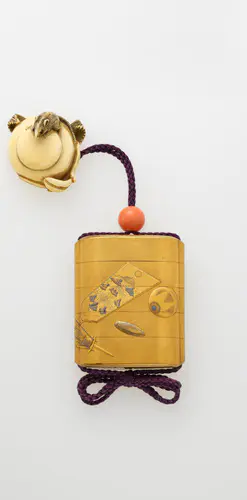
節句飾蒔絵印籠 銘 橘玉山
{節句飾蒔絵印籠 銘 橘玉山 · 大村玉山 · 江戸時代中期-後期(18-19世紀) / Mid-Late Edo Period (18-19th c.) · Japan Search · 国立国会図書館}
New Year Decoration Pictorial Scrolls, Seal: Orange Jade Mountain. · Otomura Tuyama This catalog introduces the collection of the Otomura Tuyama Museum. The museum houses a vast assembly of ceramics, primarily from the ancient Japanese periods. Among these treasured artifacts, there are numerous examples of exquisite pottery, showcasing the mastery of traditional Japanese techniques. Moreover, the collection includes a significant number of rare and valuable pieces, some of which bear the distinctive marks of esteemed artisans. The museum's mission is to preserve and exhibit these cultural gems, providing visitors with a deeper understanding and appreciation of Japan's rich artistic history. Each piece in the collection is meticulously displayed in its designated space, allowing for easy exploration and enjoyment. Furthermore, the museum provides educational resources and guided tours, enabling visitors to learn about the historical context and artistic significance of each artifact. In addition, the museum hosts various events and workshops, offering opportunities for visitors to engage with the collection and learn new skills related to Japanese ceramics. Through its diverse offerings, the Otomura Tuyama Museum aims to inspire and delight visitors, fostering a greater connection to the art and culture of Japan.

In the past, a four-paneled reliquary box, was decorated with gold and silver inlay. The main panels depicted high-relief sculptures of a feather fan, a buriburi (a type of fan), and a magic bow. The interior was lined with gold lacquer. The bottom center had a stamp.

昔形4段の印籠で、金粉溜地に高蒔絵で羽子板・ぶりぶり・破魔弓を高蒔絵で表す。段内部は金梨子地。底部中央下に作銘。

View the original at Japan Search →
The law
景観法
Landscape Act
平成十六年法律第百十号 · Act No. 110 of 2004

Article 1 states the aim as a beautiful and dignified national land, and it covers not only cities but farming, mountain and fishing villages. Inside a landscape planning area, Article 16 requires advance notification of new building, extension, rebuilding, relocation, and any repair or alteration that changes the exterior. Landscape Districts go further and impose direct restrictions on the form and design of buildings.

The cool part. Read Article 16 to the end of the sentence. A change of colour is listed alongside new construction as an act you must notify. Repainting your building is, in law, the same category of event as putting up a new one. This is the machinery behind the muted shopfronts of Kyoto. The brown coffee-shop sign is not a marketing choice, it is compliance.

Verify at e-Gov 法令検索 →

Use it Take the ratio, not the picture. It sets a page better than a grid does.

Description source: museum curator text, translated — not generated