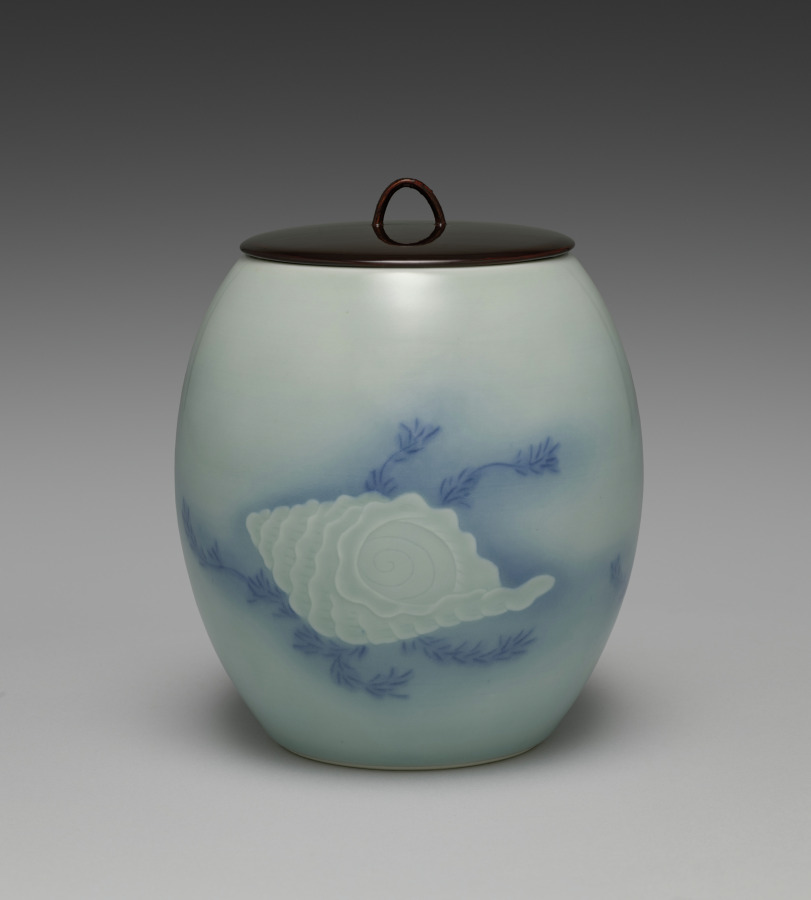
Yohei IV chose an aquatic theme for this mizusashi. He applied clay to the surface and molded the shape of a large conch on one side and, on the other, a clam and a scallop. The finer details he incised into the surface of his low-relief shapes. He then painted seaweed as though it were coming out from behind the sea creatures, and he further set off the animals using a masking technique with a gradated blue surround. Finally, he applied a translucent blue glaze, identified on the box as mizusai, over the entire body of the vessel. The resulting effect is that one imagines having descended through the water to the ocean floor.
View the original at Cleveland Museum of Art →Unusually for a Japanese statute it opens with a preamble, which states that finding joy in creating culture and living among it is an unchanging wish of people, and that culture contributes to world peace. Article 2 then sets the principles: the autonomy of those who make culture must be fully respected, and their creativity, standing and capacity considered.
The cool part. Article 2, paragraph 3 is the line worth reading twice. It says that creating and receiving culture is a right people are born with, and requires an environment in which citizens can appreciate, participate and create regardless of age, disability, economic situation, or the area they live in. Four barriers named in statute, one of which is your postcode. It puts the arts in the same grammatical register as infrastructure. Not a subsidy argued for each year, a standing obligation.
Verify at e-Gov 法令検索 →Use it Palette for a single-colour run: one ink, heavy stock, nothing else on the sheet.
Description source: museum curator text — not generated