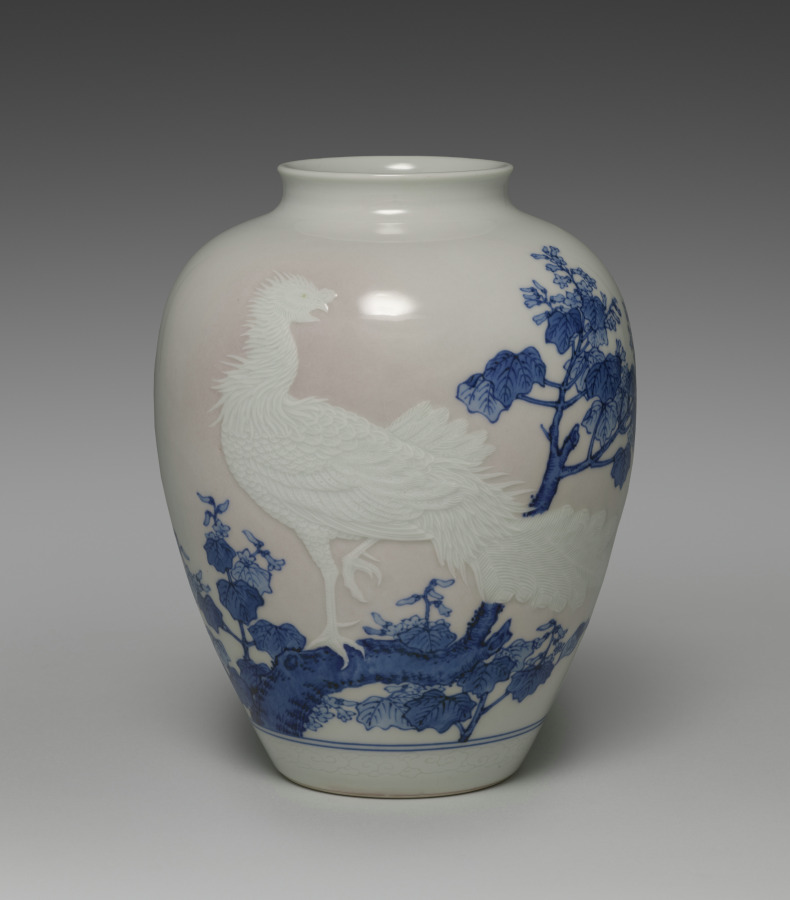
The phoenix’s commanding presence on this vase was created by adding clay to the surface of the white clay body and then intricately molding and carving it. Then cobalt blue was used to paint the paulownia tree upon which the phoenix perches. Yohei III used a masking technique, covering the phoenix with paper before adding pink color to the area surrounding it. Firing with an allover transparent glaze created a glossy surface, with the phoenix standing out boldly from the background. The mythical bird’s long tail sweeps majestically around the vessel so that one must move around it to see the eyespots in its plumes. A symbol of imperial power in both China and Japan, the phoenix is said to alight only in the paulownia tree. Upon close inspection of its face, one can see that the phoenix’s eye is in yellow under the glaze. The scene is set off at the bottom with a double band of underglaze blue above an incised ring of cloud. Once Yohei III had created his creamy translucent taihakuji glaze, he began applying it over the entire surface of an ivory clay body with motifs in low relief to achieve a creamy white-on-white design. He then began using the combination of gradated pink around raised motifs on a typical white porcelain clay body like the one for this vase.
View the original at Cleveland Museum of Art →Article 1 states the aim as a beautiful and dignified national land, and it covers not only cities but farming, mountain and fishing villages. Inside a landscape planning area, Article 16 requires advance notification of new building, extension, rebuilding, relocation, and any repair or alteration that changes the exterior. Landscape Districts go further and impose direct restrictions on the form and design of buildings.
The cool part. Read Article 16 to the end of the sentence. A change of colour is listed alongside new construction as an act you must notify. Repainting your building is, in law, the same category of event as putting up a new one. This is the machinery behind the muted shopfronts of Kyoto. The brown coffee-shop sign is not a marketing choice, it is compliance.
Verify at e-Gov 法令検索 →Use it Take the ratio, not the picture. It sets a page better than a grid does.
Description source: museum curator text — not generated