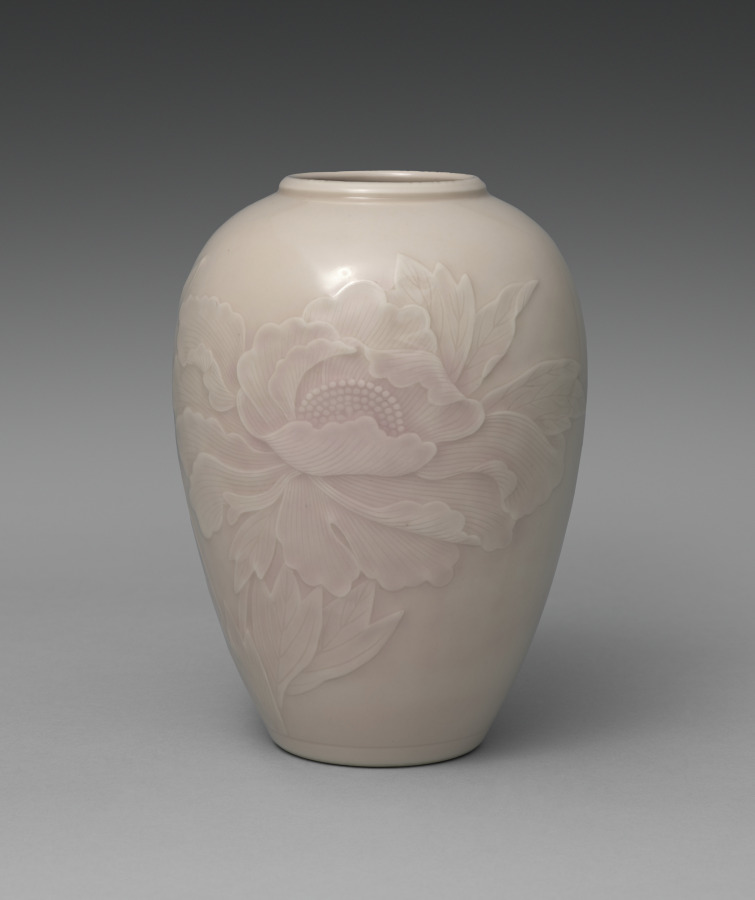
This flower vase has a creamy white glaze infused with pink. Sadly, the box has been lost, so we cannot know how it was described by the studio. However, through comparison with other works, it is possible to surmise that the work can be categorized as kanpakuji with in-glaze pink. A single huge blossom shoots up into the widest part of the vessel, near the top, so it will be visible from a distance. If this design is displayed in a space with a decorative alcove located some distance away from the entrance, even at a remove, it can announce the taste of its owner and immediately please a guest. On the other side of the vase, two butterflies, their wings overlapping, flit through the sky.
View the original at Cleveland Museum of Art →Japan implementing the 1970 UNESCO Convention. When a foreign state reports that cultural property has been stolen from an institution, the Ministry of Foreign Affairs notifies the education ministry, which designates the object as specified foreign cultural property, after consulting the trade ministry. Importing a designated object then requires approval under the foreign exchange and trade law.
The cool part. Article 6 quietly rewrites private law. Under the Civil Code a good-faith purchaser is normally secure against a recovery claim after two years. For designated stolen foreign cultural property, the victim may demand recovery from two years after the theft until ten years have passed. Buying in good faith does not settle the question for a decade, which is roughly how long it takes a stolen object to surface on a legitimate market.
Verify at e-Gov 法令検索 →Use it A motif small enough to blind-deboss, which is where restraint actually shows.
Description source: museum curator text — not generated