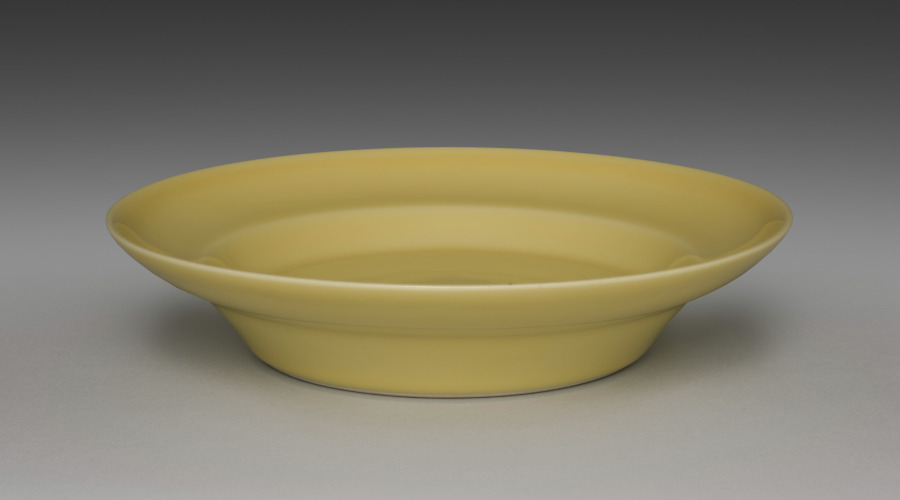
Seifu Yohei III was the leading figure of a Kyoto ceramics studio producing Chinese-style porcelains, particularly items for sencha tea ceremonies. Sencha, the drinking of steeped-leaf tea with friends, was popular among Kyoto and Osaka's bunjin community, who sought to emulate Chinese culture. Although less formal than the Japanese tea ceremony, sencha still showcased cherished possessions. Chinese antiquities were seldom accessible, so alternatives, like the Gu-Shaped Flower Vase (CMA 2022.224), were highly sought after. Serving bowls for distributing sweets were also common in sencha social gatherings.
Seifū Yohei III was the most prominent head of a ceramics studio in Kyoto that specialized in Chinese-style porcelains and especially items for use in sencha (煎茶), or the drinking of steeped-leaf tea with companions. Sencha was popular among the bunjin of Kyoto and Osaka, who often enjoyed it as part of their emulation of Chinese culture. While sencha was by design less formal than the Japanese tea ceremony, it still featured the display of treasured objects. Prized Chinese antiquities were generally unobtainable, so substitutes such as the Gu-Shaped Flower Vase, CMA 2022.224, were much in demand. Bowls for distributing sweets, like this one, were also a staple of sencha gatherings.
View the original at Cleveland Museum of Art →Article 1 describes the Ainu as the indigenous people of the northern part of the Japanese archipelago and of Hokkaido in particular, and cites international circumstances concerning indigenous peoples as a reason for acting. It requires the government to set a basic policy, and lets municipalities draw up regional plans for approval by the Prime Minister.
The cool part. The definition in Article 2 is the part to sit with. Ainu culture means the Ainu language, and the ways of living, music, dance, crafts and other cultural products inherited among the Ainu, and cultural products developed from these. That final clause refuses to freeze the culture at a date, and treats what is made next as equally the thing being protected. The Act then reaches into trademark law, reducing or waiving registration fees for regional collective trademarks used by approved projects.
Verify at e-Gov 法令検索 →Use it Take the ratio, not the picture. It sets a page better than a grid does.
Description source: museum curator text, translated — not generated