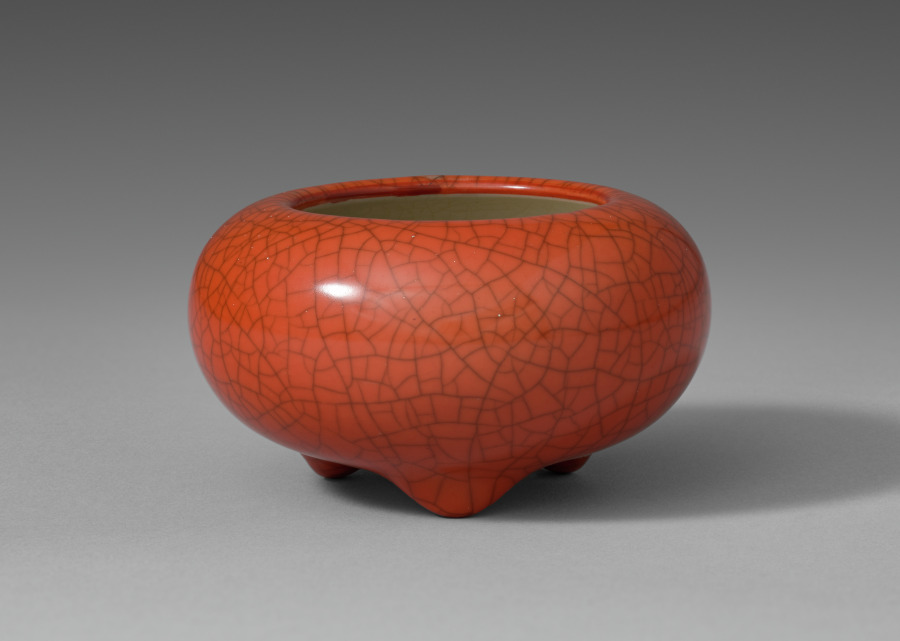
The tiniest of containers, this ovoid tripod is an incense burner. It likely once had an openwork metal lid. It is remarkable for its coral red color and crackled glaze. In contrast to the exterior, the interior has been left white under a transparent glaze. The “coral red glaze” is one Yohei III developed in 1887 and called sangōyu. Sensational among colors known at that time, Yohei III won first prize for his work glazed with it at the annual exhibition of the Japan Art Association (Bijutsu Kyokai) in 1888.
View the original at Cleveland Museum of Art →Unusually for a Japanese statute it opens with a preamble, which states that finding joy in creating culture and living among it is an unchanging wish of people, and that culture contributes to world peace. Article 2 then sets the principles: the autonomy of those who make culture must be fully respected, and their creativity, standing and capacity considered.
The cool part. Article 2, paragraph 3 is the line worth reading twice. It says that creating and receiving culture is a right people are born with, and requires an environment in which citizens can appreciate, participate and create regardless of age, disability, economic situation, or the area they live in. Four barriers named in statute, one of which is your postcode. It puts the arts in the same grammatical register as infrastructure. Not a subsidy argued for each year, a standing obligation.
Verify at e-Gov 法令検索 →Use it Palette for a single-colour run: one ink, heavy stock, nothing else on the sheet.
Description source: museum curator text — not generated