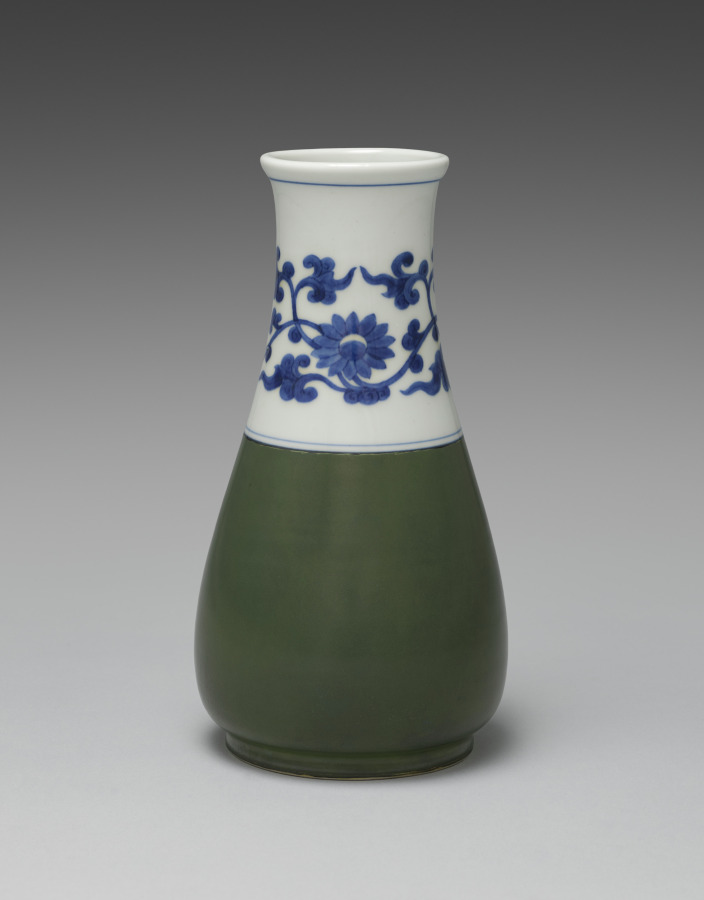
The upper part of this vase is painted in underglaze blue with a floral scroll of leaves accentuated with a single chrysanthemum motif on each face and bound at top and bottom with single blue lines. The box lid for the vase is short on detail; the inscription notes only that it is a flower vase with underglaze blue. It is possible that the box is a mismatch because the inscription does not mention the vase’s more distinctive feature: the deep green glaze on its lower half, which is seen much less frequently among Yohei III’s works. This glaze may be an example of a dark green porcelain glaze called rōkanji, which the artist invented in 1892. The name of the glaze comes from Chinese, in which it is pronounced langgan. It may literally mean “tinkling sound of jade” and could refer to malachite, among other proposed identifications.
View the original at Cleveland Museum of Art →Unusually for a Japanese statute it opens with a preamble, which states that finding joy in creating culture and living among it is an unchanging wish of people, and that culture contributes to world peace. Article 2 then sets the principles: the autonomy of those who make culture must be fully respected, and their creativity, standing and capacity considered.
The cool part. Article 2, paragraph 3 is the line worth reading twice. It says that creating and receiving culture is a right people are born with, and requires an environment in which citizens can appreciate, participate and create regardless of age, disability, economic situation, or the area they live in. Four barriers named in statute, one of which is your postcode. It puts the arts in the same grammatical register as infrastructure. Not a subsidy argued for each year, a standing obligation.
Verify at e-Gov 法令検索 →Use it Take the ratio, not the picture. It sets a page better than a grid does.
Description source: museum curator text — not generated