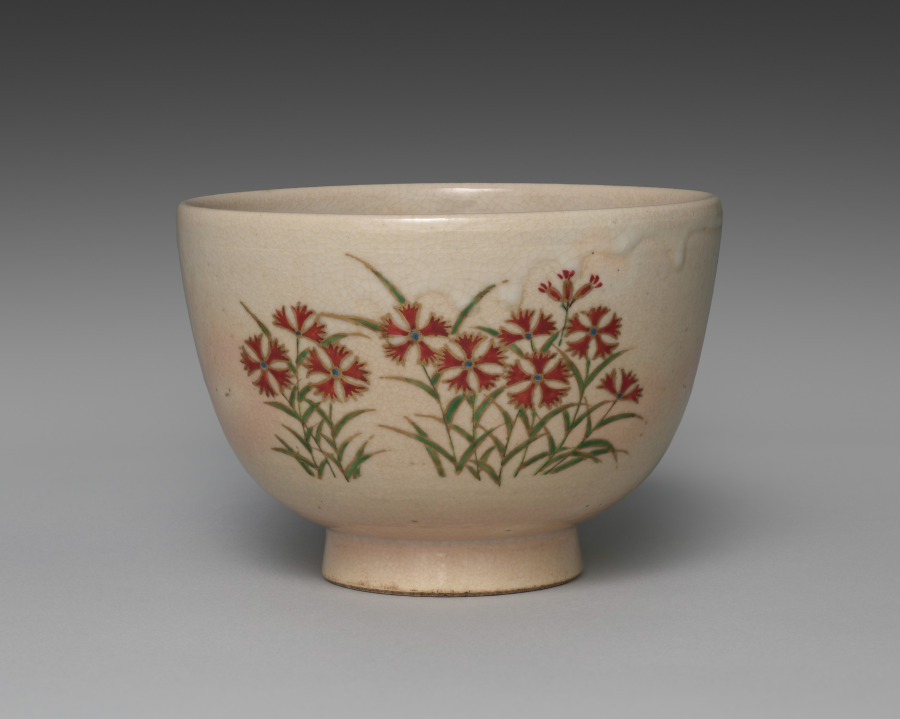
This teabowl, for use in chanoyu, is a good example of Yohei III’s mastery of the techniques involved in producing Kyoto ware. The painting of the pinks, with their blue centers, bright red petals, and green leaves, is carefully controlled with crisp gold borders throughout. There is crackling in the transparent glaze and obvious, thick dripping of the milky glaze over the outside of the mouth of the bowl. The pink spots would have appeared in the clay during firing, and the bottom of the inside of the bowl is entirely pink. A triangular wedge has been cut away from the foot, and a gently impressed band rings the bowl beneath the rim.
View the original at Cleveland Museum of Art →Article 1 describes the Ainu as the indigenous people of the northern part of the Japanese archipelago and of Hokkaido in particular, and cites international circumstances concerning indigenous peoples as a reason for acting. It requires the government to set a basic policy, and lets municipalities draw up regional plans for approval by the Prime Minister.
The cool part. The definition in Article 2 is the part to sit with. Ainu culture means the Ainu language, and the ways of living, music, dance, crafts and other cultural products inherited among the Ainu, and cultural products developed from these. That final clause refuses to freeze the culture at a date, and treats what is made next as equally the thing being protected. The Act then reaches into trademark law, reducing or waiving registration fees for regional collective trademarks used by approved projects.
Verify at e-Gov 法令検索 →Use it Palette for a single-colour run: one ink, heavy stock, nothing else on the sheet.
Description source: museum curator text — not generated