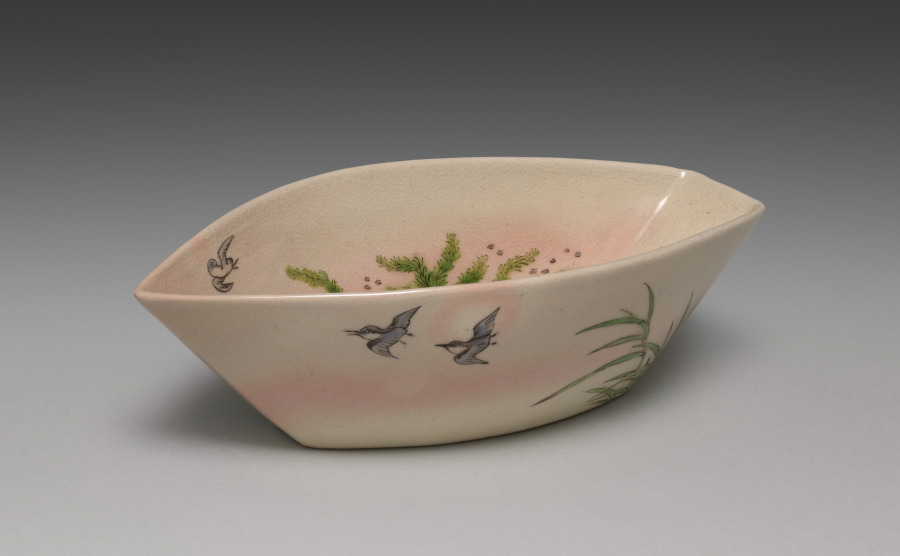
Overglaze color enamels create a seascape made complete by the bowl’s boat shape. The bowl’s form inserts a human presence into the scene, much in the way rusu mōyō is used in paintings to suggest people just out of view. Rusu mōyō is a pictorial device by which the presence of someone physically absent from an image is conveyed through the depiction of clothing or other items. The inside of the bowl has a scene of plovers flying through the sky over a profusion of seaweed in sand below. In addition to the black, gray, and green of the overglaze elements, warm pink banding and mottling in the clay come through the glaze and are remarkably effective at suggesting the seashore.
View the original at Cleveland Museum of Art →A craft cannot call itself traditional by taste or reputation. Article 2 sets five conditions, all of which must hold: it is used mainly in daily life, the main part of its making is by hand, it is made by traditional techniques, it is made chiefly from materials traditionally used, and a not-small number of people in a defined area still make it. The designation names the techniques, the materials and the region.
The cool part. Two conditions do quiet work. The first is daily use, so a technique kept alive only for display does not qualify. The fifth is the number of makers: the law will not protect a single surviving genius, because one person is a biography and not an industry. And because the region is written into the designation, the craft is legally attached to a place and cannot move.
Verify at e-Gov 法令検索 →Use it Palette for a single-colour run: one ink, heavy stock, nothing else on the sheet.
Description source: museum curator text — not generated