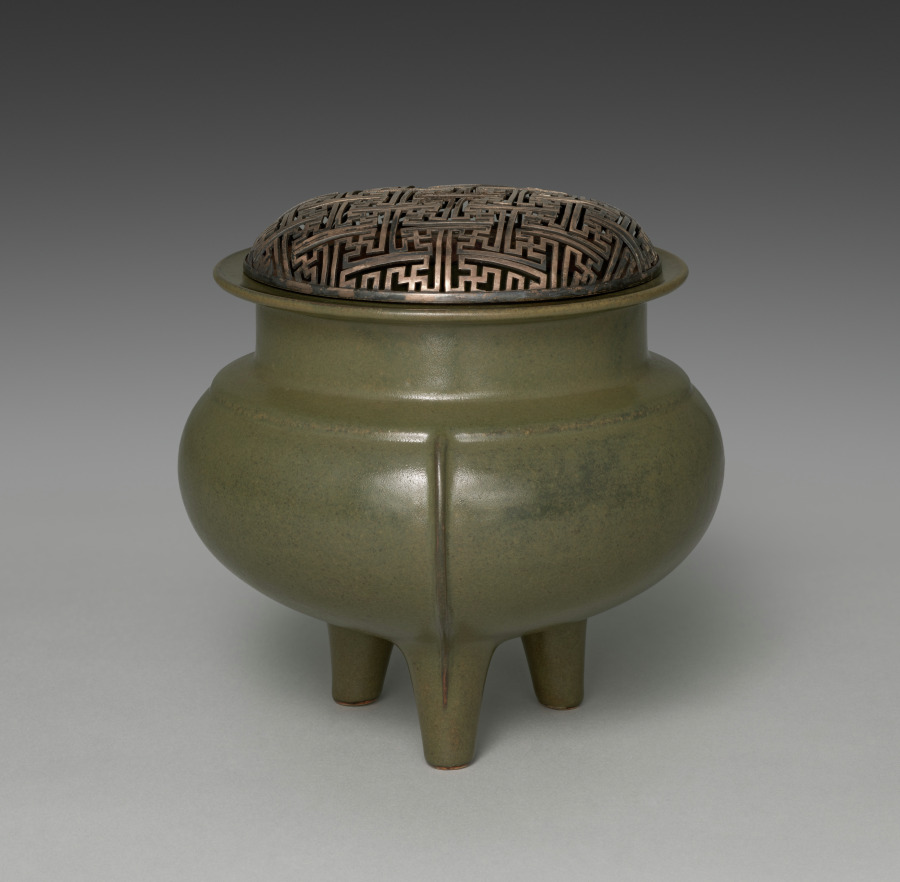
Kyoto-based Japanese ceramist Seifū Yohei III (1851–1914) admired the glaze colors found on Chinese porcelain and tried to replicate them through intensive experimentation. His green and creamy white glazes were particularly well received. The combinations of colors with subtle molded and incised decorations in his ceramics respond powerfully to changes in light, creating a dynamic viewing experience. Names for the glazes, written in ink with a brush on the lids of the custom-made storage boxes for the works, often indicate a specific glaze or ware that had inspired him, even when the resulting color was distinctively his own.
View the original at Cleveland Museum of Art →A craft cannot call itself traditional by taste or reputation. Article 2 sets five conditions, all of which must hold: it is used mainly in daily life, the main part of its making is by hand, it is made by traditional techniques, it is made chiefly from materials traditionally used, and a not-small number of people in a defined area still make it. The designation names the techniques, the materials and the region.
The cool part. Two conditions do quiet work. The first is daily use, so a technique kept alive only for display does not qualify. The fifth is the number of makers: the law will not protect a single surviving genius, because one person is a biography and not an industry. And because the region is written into the designation, the craft is legally attached to a place and cannot move.
Verify at e-Gov 法令検索 →Use it The border is the idea. Use it as an edge treatment and leave the centre empty.
Description source: museum curator text — not generated