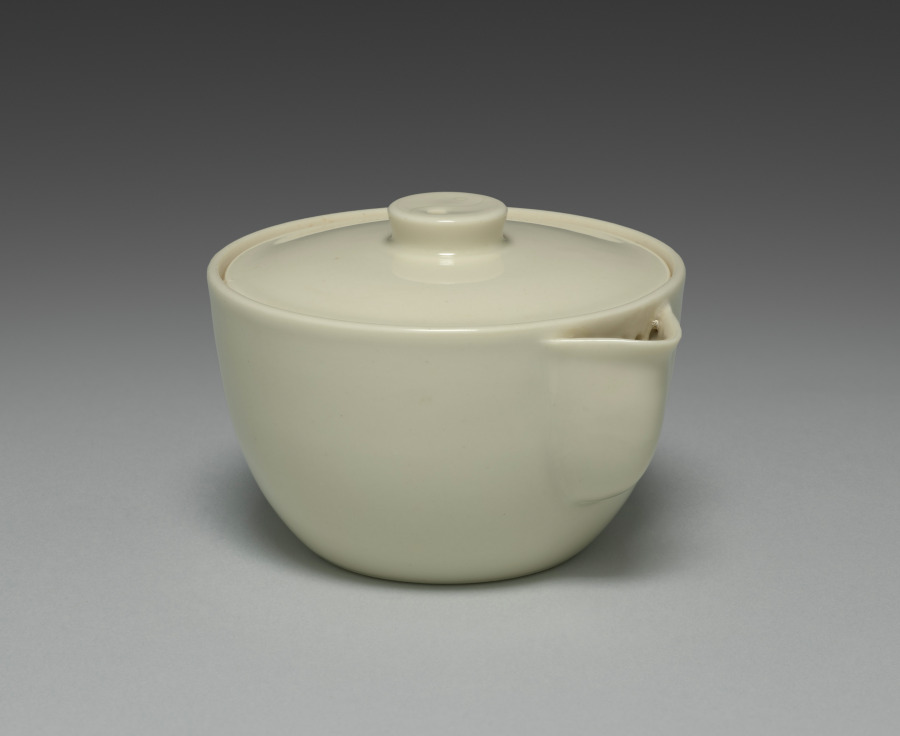
This teapot is of a variety used by advanced sencha practitioners. Called a hōhin, the pot is designed to be held directly by the fingers, with the body touching the upper part of the palm. This shape allows the host to manipulate the pot with a single hand and demonstrate dexterity. Direct contact between the ceramic body and the hand allows the host to closely gauge the temperature of the water within. There are differing grades of sencha, and for the finest one, gyokuro, the water temperature must be carefully regulated to achieve the proper flavor. This vessel is therefore efficacious for preparing this high-quality tea. The hōhin is also extremely portable, so it is well suited for impromptu gatherings. According to its box, this teapot is an example of taihakuji. “Great-white porcelain” was an important early invention Yohei III devised in 1972. It involved the combination of a distinctive translucent, creamy glaze over an ivory-colored clay body.
View the original at Cleveland Museum of Art →A weapons statute that contains the most important art registry in the country. Article 2 defines a sword by measurement: a blade of fifteen centimetres or more for a sword, spear or naginata, five and a half for a dagger. Article 14 then carves out an exception. The prefectural board of education registers old firearms of value as art or antiques, and swords of value as art, on the basis of an appraisal by registration examiners appointed for their scholarly knowledge.
The cool part. A Japanese sword is lawful to own because it has been certified as art. Not because it was disarmed, not because it was licensed as a weapon. The judgement is made by the board of education, and Article 14 then requires the board to notify the prefectural public safety commission of what it has decided. The culture side rules, and the police are informed afterwards. Fail the appraisal and the same object becomes contraband.
Verify at e-Gov 法令検索 →Use it Palette for a single-colour run: one ink, heavy stock, nothing else on the sheet.
Description source: museum curator text — not generated